Fit Fun Friends
A Wellness App Designed for Teens. A Design Sprint focused on bringing health and wellness to teenagers and young adults through gamification and social features.
The Product
A 4-day design sprint focused on creating a wellness app that helps teenagers build healthy habits through gamification, social accountability, and fun challenges with friends.
Product Designer
4-Day Design Sprint
What this project achieved
Created a gamified system with accountability, visible progress, and peer support to sustain daily habits.
A validated concept tested with real users in just 4 days, proving that emotional drivers matter more than features.
Understand the Problem

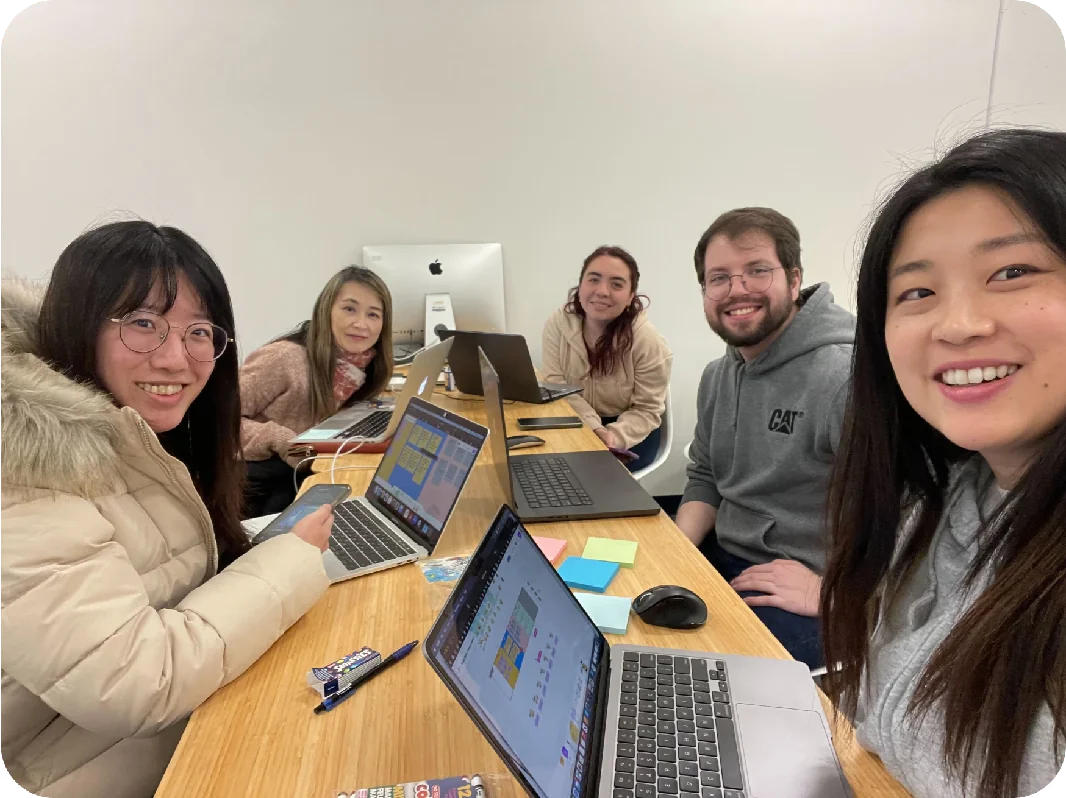
Day-one alignment: the team agreeing on the goal, the persona, and the constraints before any pixels were touched.
Long Term Goal
Create a gamification-based wellness experience centered on user achievements within the platform. We tested both competitive elements with other users and self-competition to drive personal progress.
How Could We Fail?
- •App takes too long to launch or has too many steps to complete activities
- •Doesn't provide meaningful rewards for each step from recipes to exercises
- •Failing to effectively promote the product to teenagers
Ideal Persona: Olivia
Demographics
- • 15 years old, Student
- • Slightly overweight
- • Loves fast food
- • Doesn't know about healthy apps
- • Loves Taylor Swift
Motivation
Physical appearance as a result of being healthy - she wants to look and feel better.
End of Story (Success)
- • She builds good healthy habits
- • She achieves a healthy and fit body
- • Her classmates get influenced and start using the app

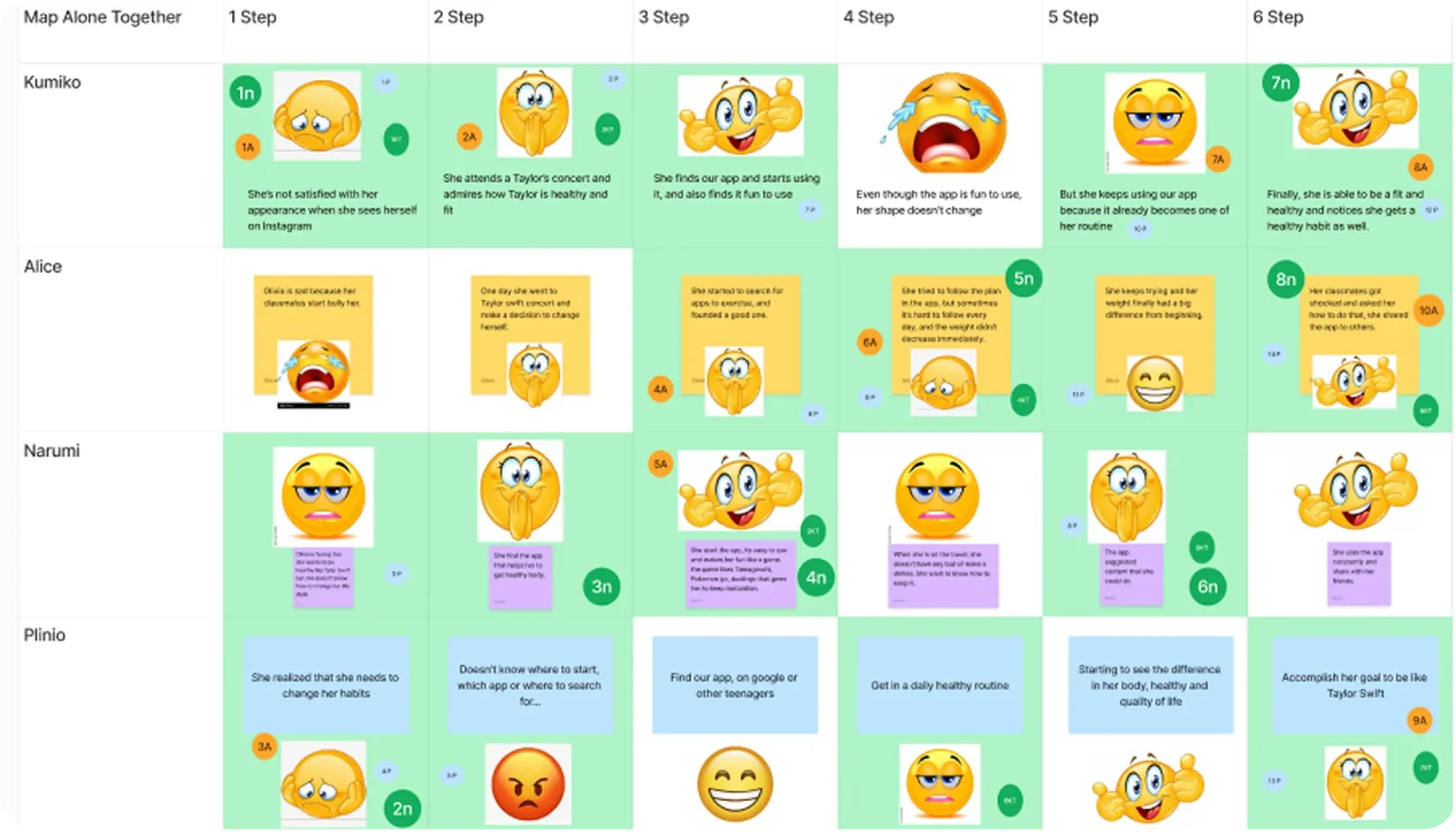
Map Alone Together exercise - Each team member mapped Olivia's journey independently before combining insights
Map & Research
On day two, we focused on understanding what information we needed to create a successful health wellness application and defined our key research questions.
Research Questions
- •What existing health apps are young people using?
- •How does gamification work in wellness apps?
- •What are the habits of teenagers like Olivia?
- •What psychology and strategies attract and retain mobile app users?
Top 5 "How Might We" Questions
- 1How might we make integration with other apps seamless?
- 2How might we provide meaningful rewards based on accomplished goals?
- 3How might we provide a gaming experience within a health app?
- 4How might we manage previous health conditions to give correct advice?
- 5How might we generate sustainable revenue?
Target Definition
- •Who: Teenagers seeking healthier lifestyles
- •When: The moment they decide to make a change in their health habits

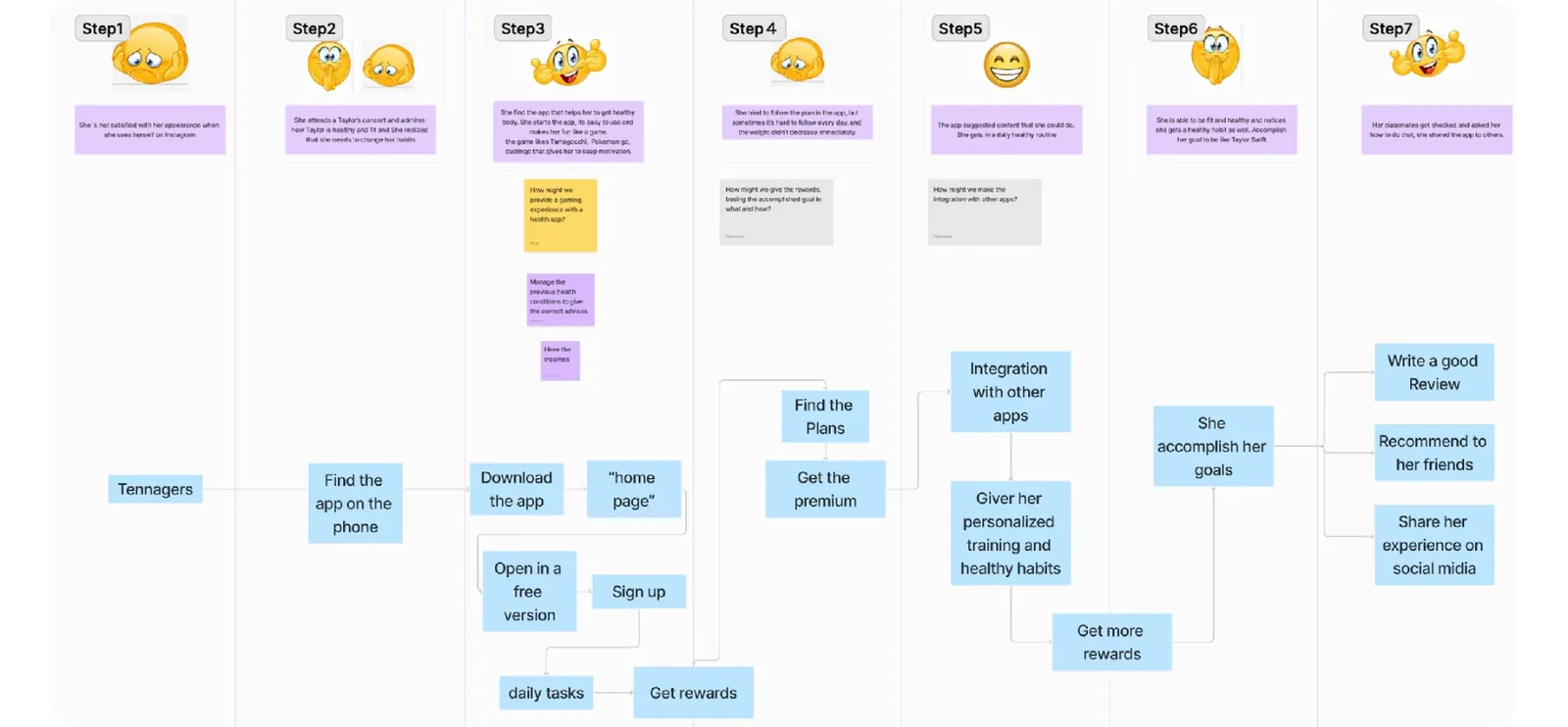
User journey mapping showing the complete flow from discovery to advocacy
Sketch
Day three was all about rapid ideation and sketching. We pushed multiple design directions through structured exercises including demos, divide and swarm, and the four-step sketch method.

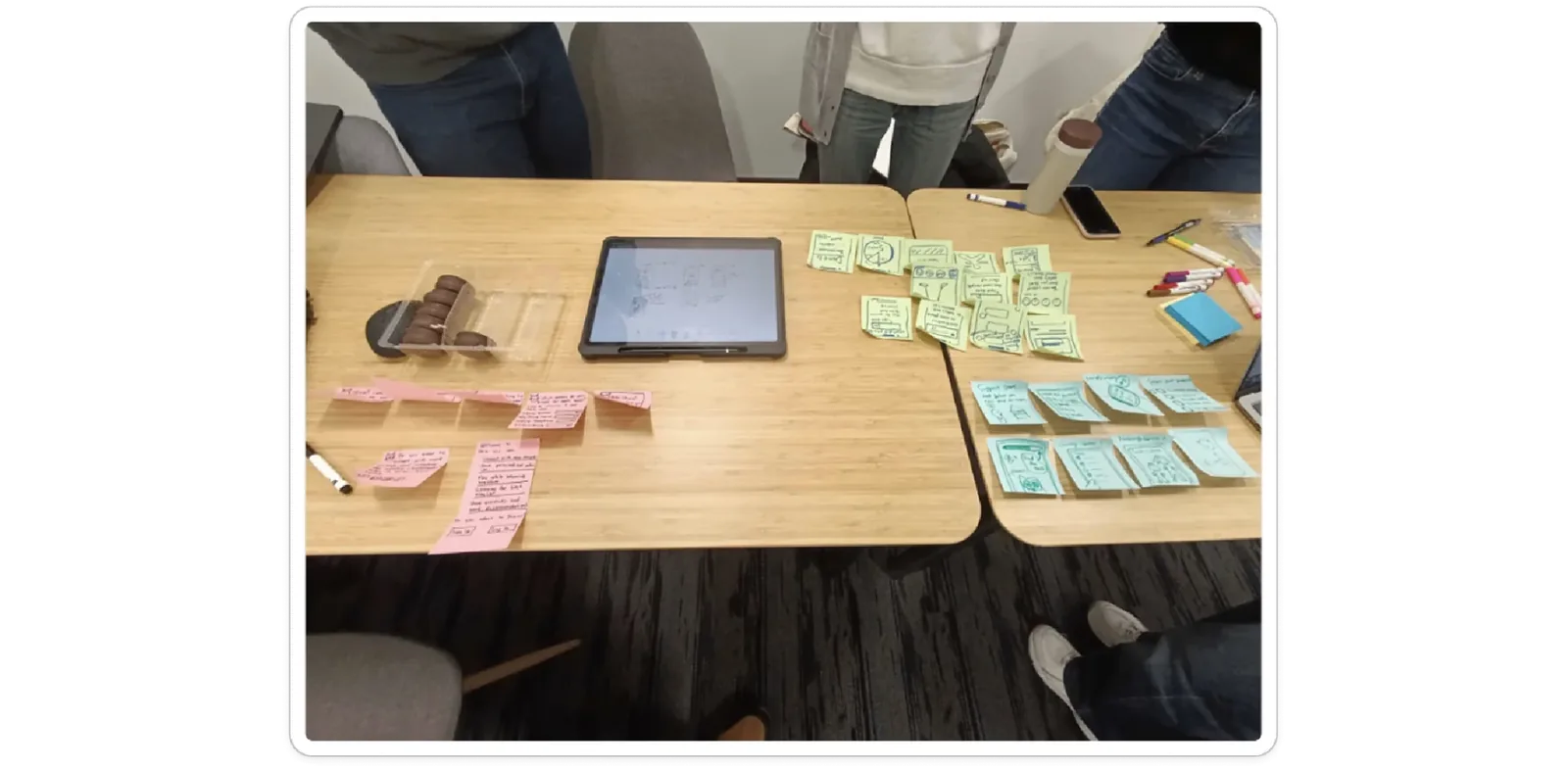
Divide and Swarm
We organized our ideas into key app sections: Homepage, Profile, Daily Tasks, Get Rewards, Find the Plans, Integration with other apps, and Personal Training.

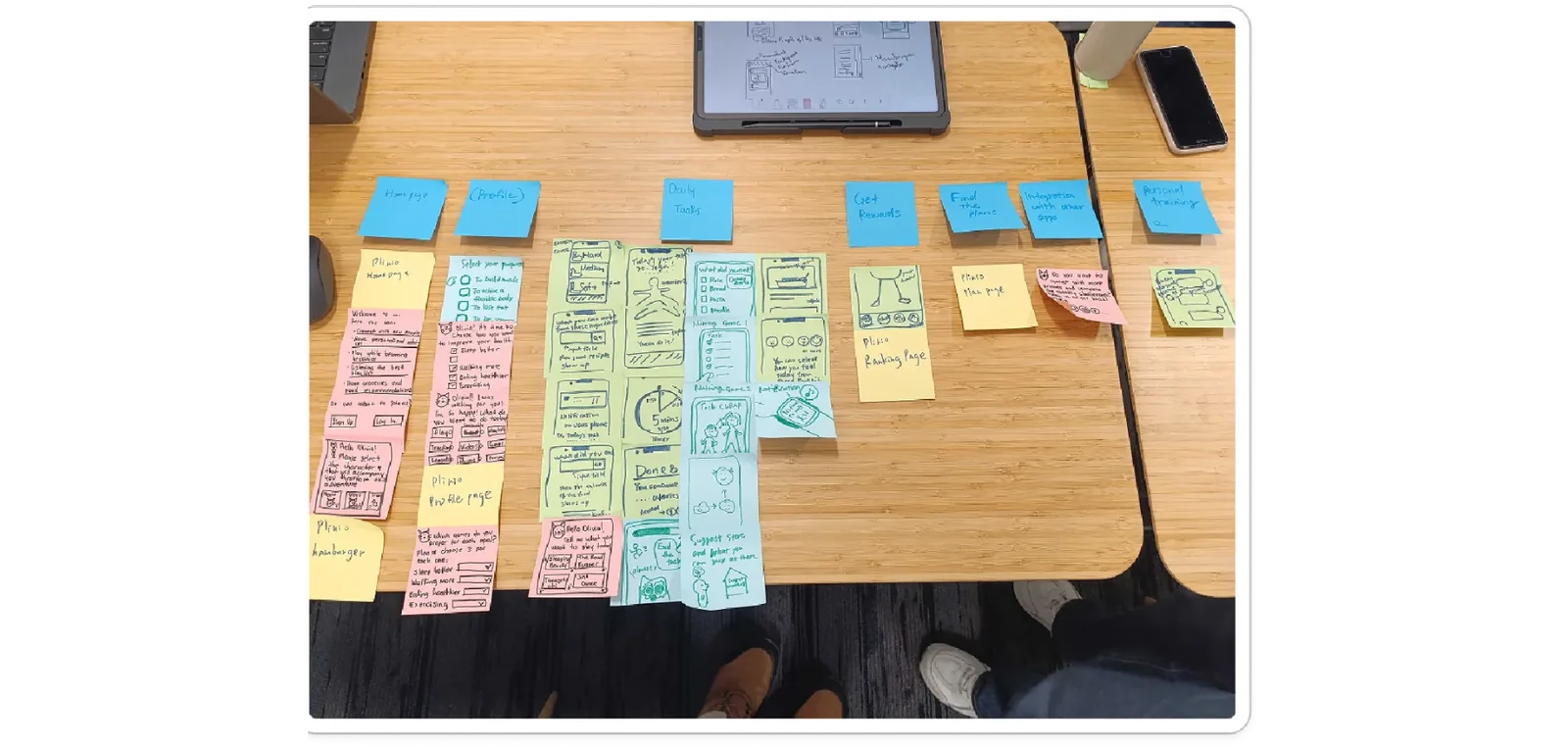
The Four-Step Sketch
Each team member created detailed sketches exploring different aspects of the app, from daily task tracking to reward systems and progress visualization.

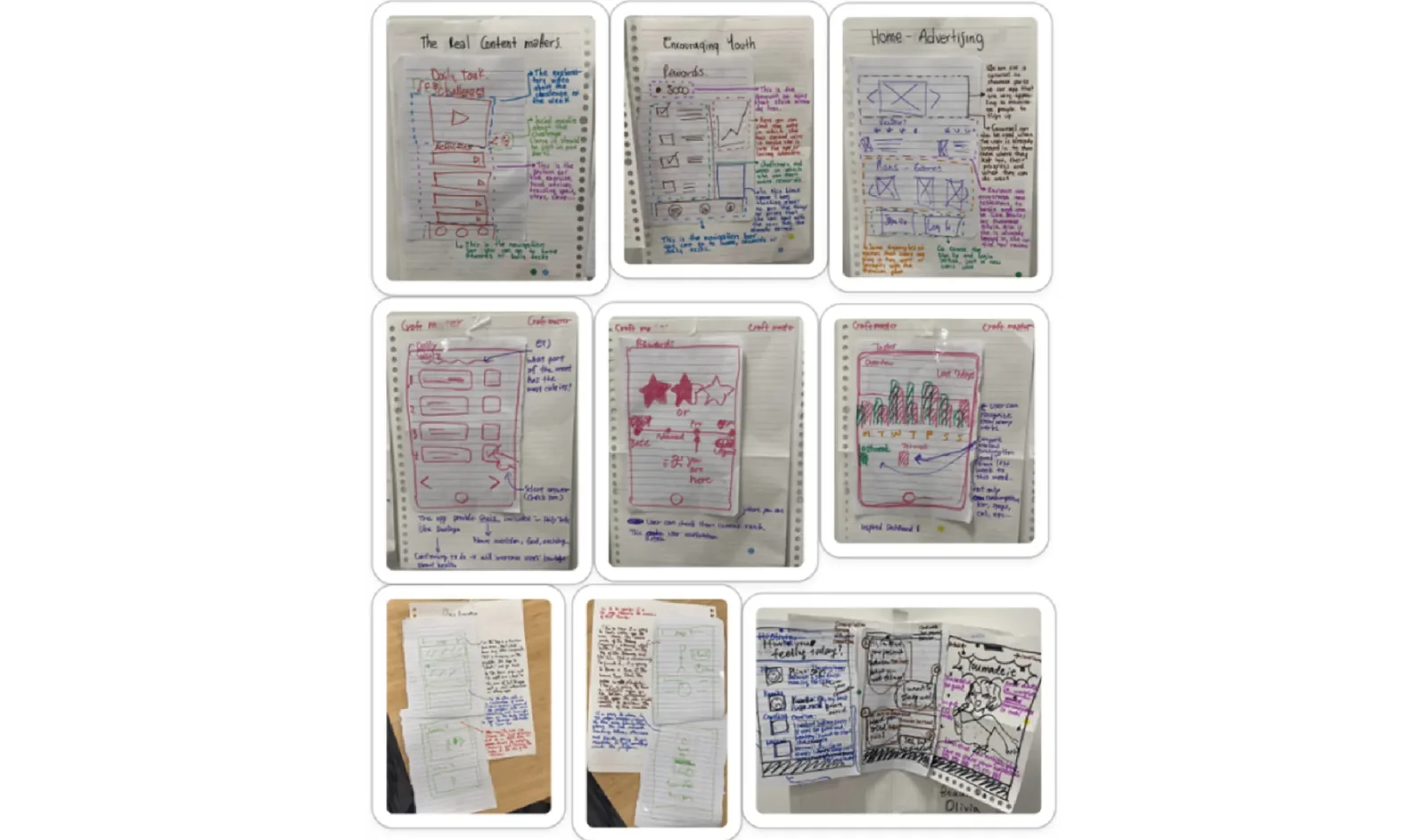

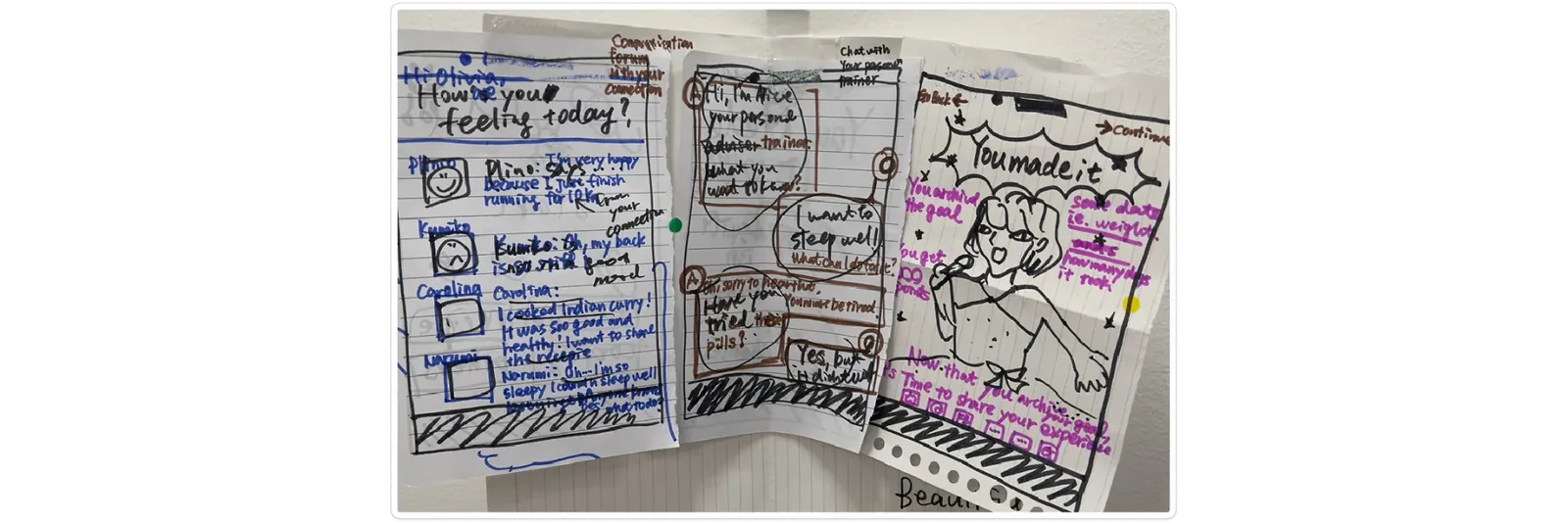
Detailed sketches showing AI personal trainer, community features, and achievement tracking
Decision & Storyboard
The final day focused on making decisions about our solution and creating a comprehensive storyboard that shows the user journey from discovering the app to becoming an engaged user.
User Journey Storyboard

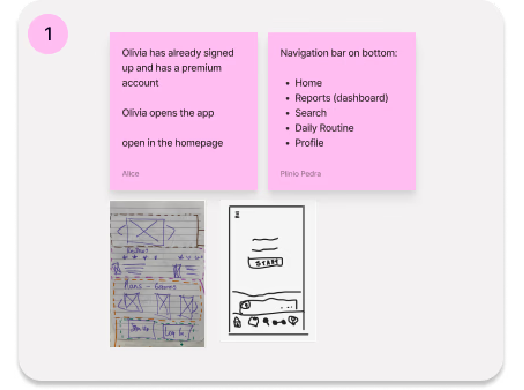
User discovers the app through a friend recommendation

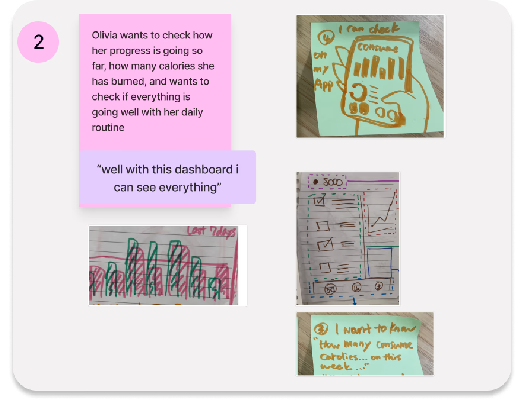
First interaction: setting up a personal fitness profile

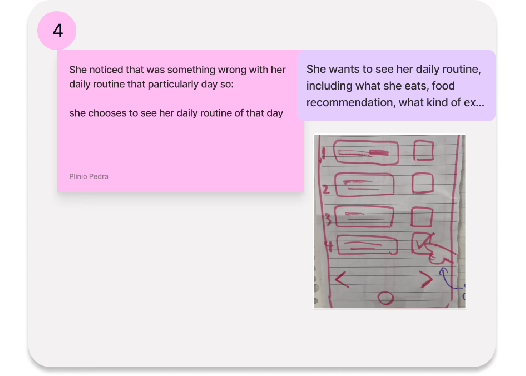
Exploring the daily routine and activity suggestions

Social feature: inviting friends to join a challenge

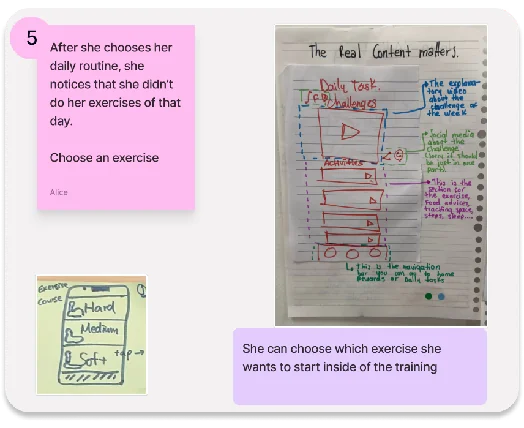
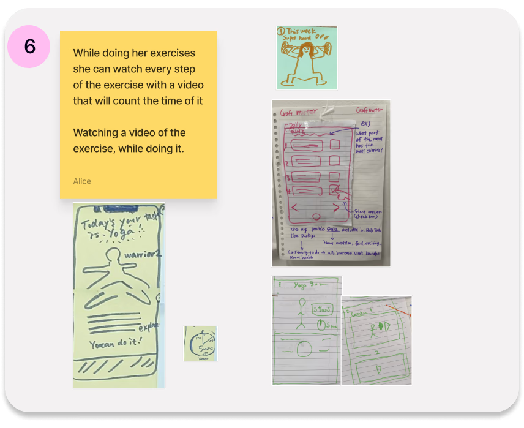
Completing a workout and earning progress points

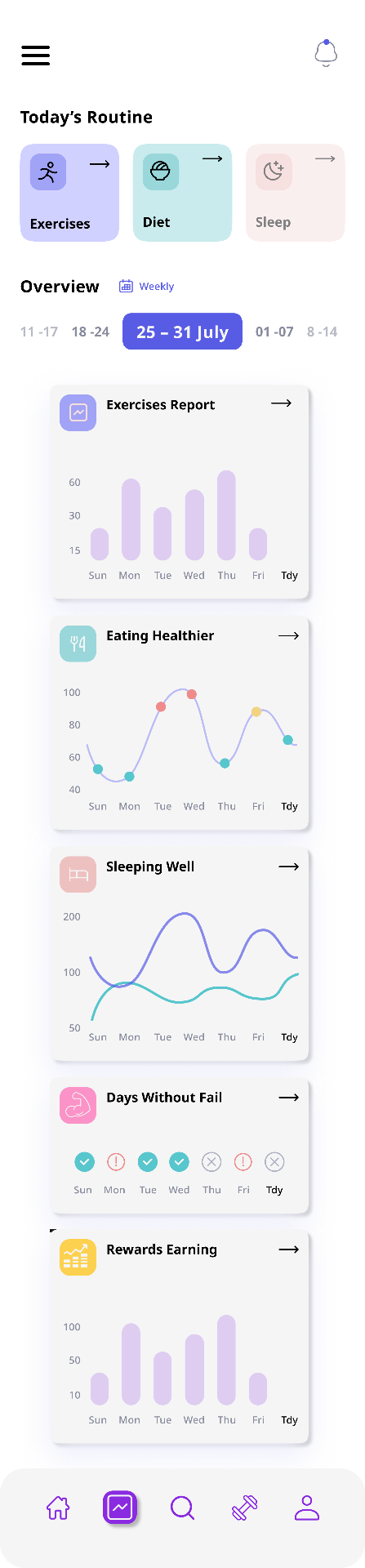
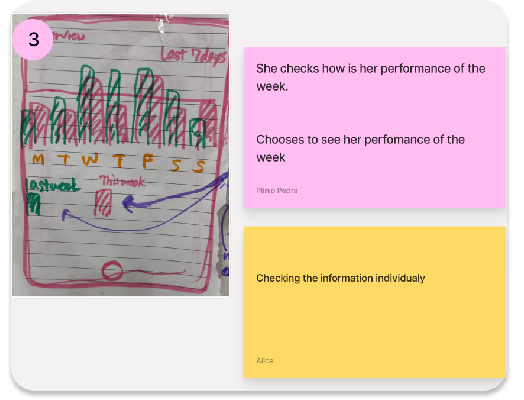
Weekly report showing achievements and streaks

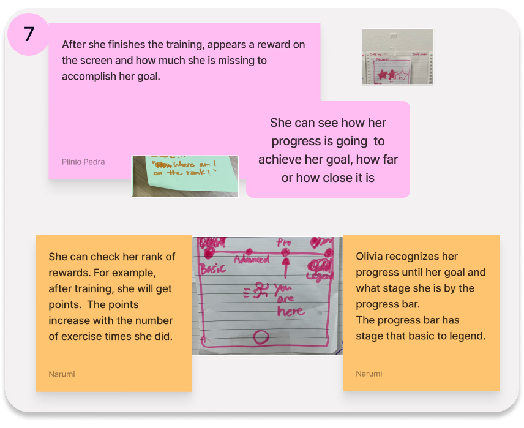
Unlocking a reward after consistent participation

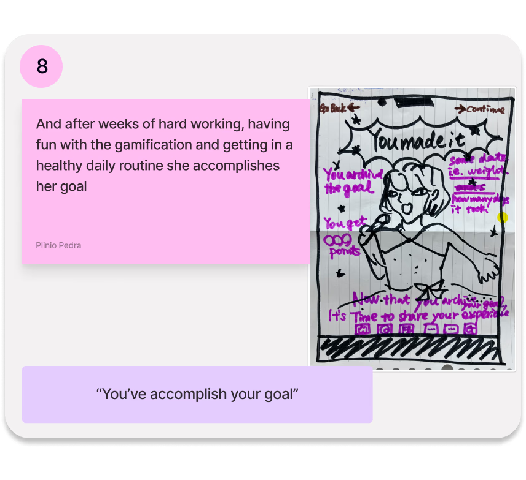
Sharing milestones with the community
Each frame maps a key moment in the user journey, validating that the app solves real problems at each touchpoint.
Key Decisions
- ✓Gamification through achievement-based rewards and progress tracking
- ✓AI personal trainer for personalized guidance and motivation
- ✓Community features for social accountability and sharing
- ✓Daily tasks covering exercise, nutrition, and sleep
- ✓Integration with fitness trackers and health apps
Design Decisions
Teens responded negatively to clinical health tracking in research. We shifted the core mechanic to achievement-based rewards and social challenges instead of calorie/step counting.
The dashboard focused on numbers like steps, calories, and BMI, which felt intimidating and boring to teenage users.
Achievement badges, streak rewards, and team challenges that turn healthy habits into a game with friends.
Shifted engagement from obligation to motivation. Teens stayed active because it felt fun, not forced.
Rather than leaving users to figure out routines alone, the AI trainer provides context-aware suggestions based on goals, history, and current energy level.
Static exercise list with no personalization or adaptation to user progress.
AI-powered personal trainer that adapts daily routines, suggests recovery days, and celebrates milestones.
Personalized guidance removed guesswork, helping users build consistent habits with adaptive support.
Inside the App
A walkthrough of the four pillars that shape Olivia's daily experience.
Social Hub
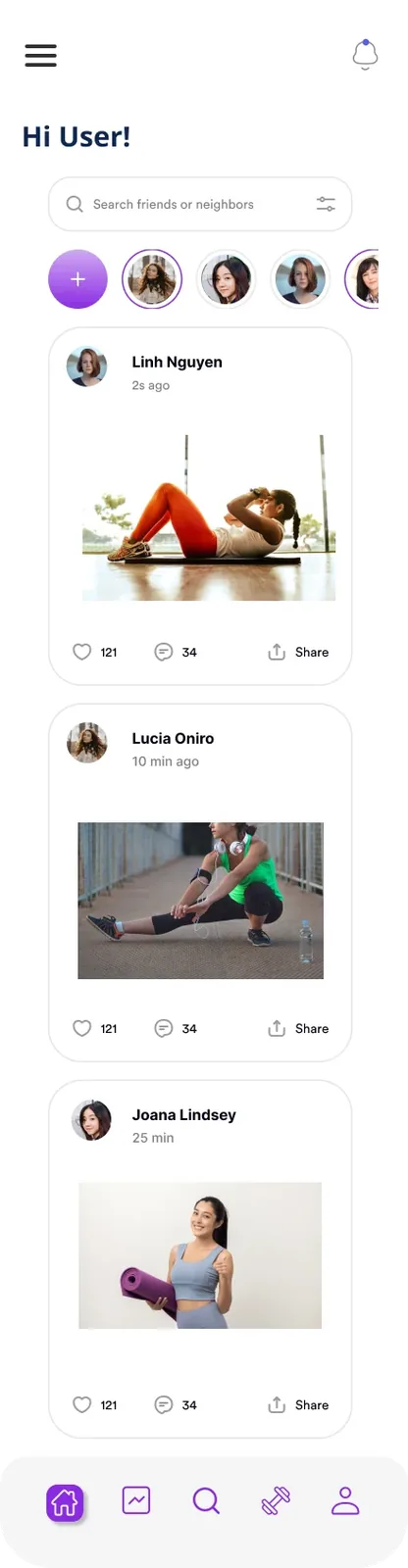
A feed where teens see what friends are doing, cheer each other on, and turn solo habits into a shared rhythm without pressure.

Daily Routine
A clear dashboard and daily plan that tells teens exactly what to do today, removing the friction of deciding where to start.


Workout & AI Trainer
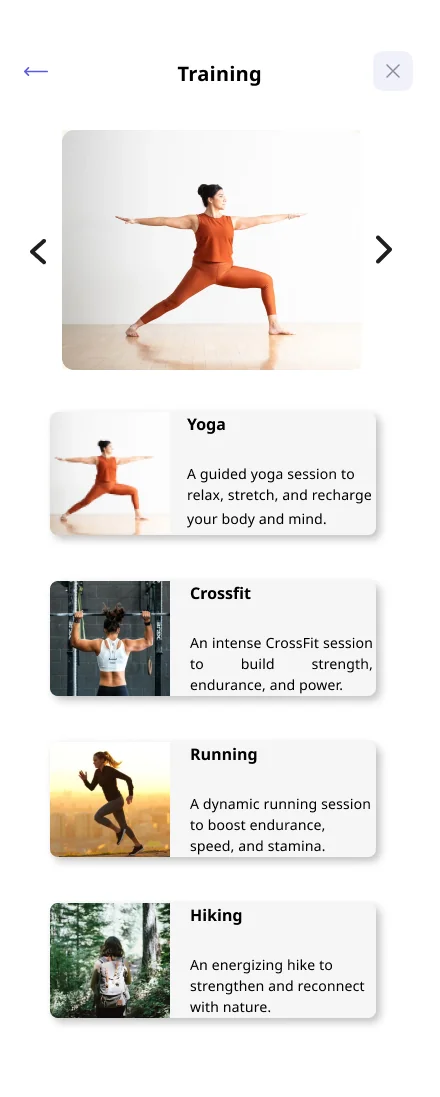
Guided sessions with an AI trainer that adapts pace and intensity, so beginners feel supported instead of judged.


Progress & Rewards
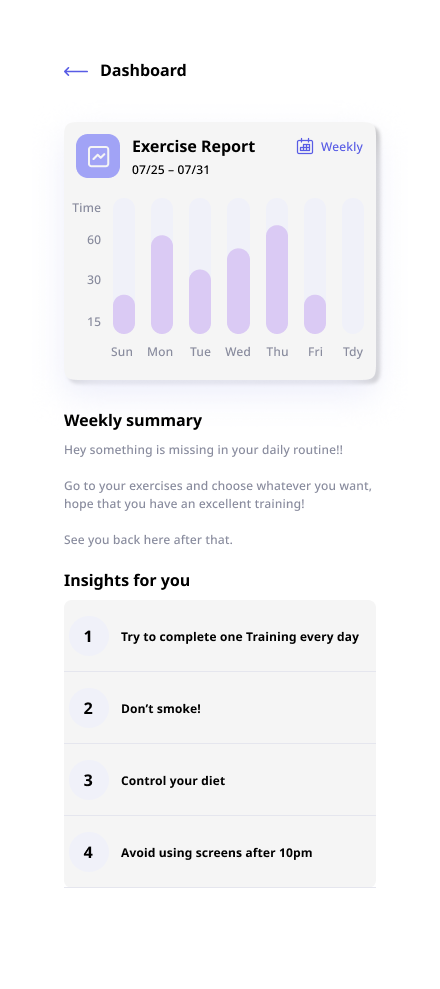
Weekly reports and unlockable rewards that make consistency visible, reinforcing the right behaviors over vanity metrics.


Explore the Prototype
Swipe through the final mockup screens of Fit Fun Friends.
1 / 7
Final Design
The high-fidelity mockups showcase Olivia's complete journey through the app, from social feed to exercise completion and rewards.
Social Feed
Dashboard
Weekly Report
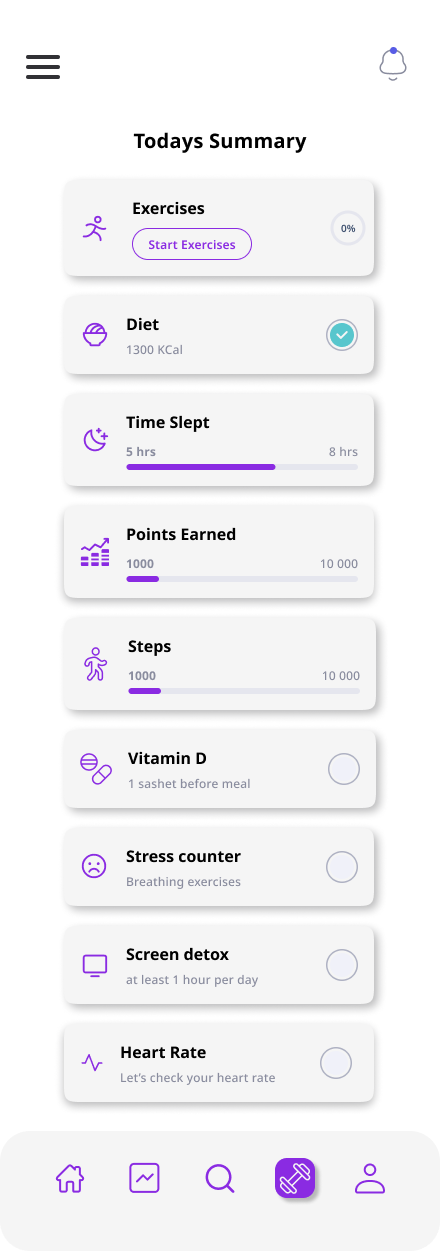
Daily Routine
Training
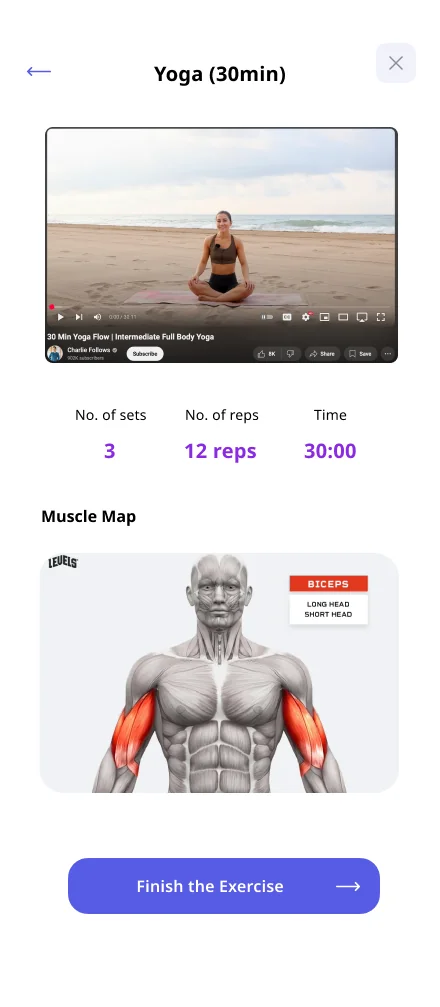
Exercise
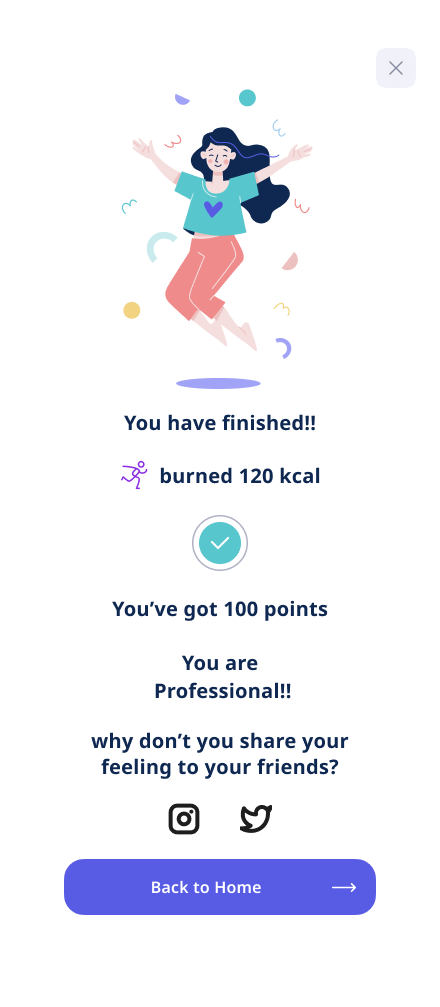
Rewards
User Testing & Validation
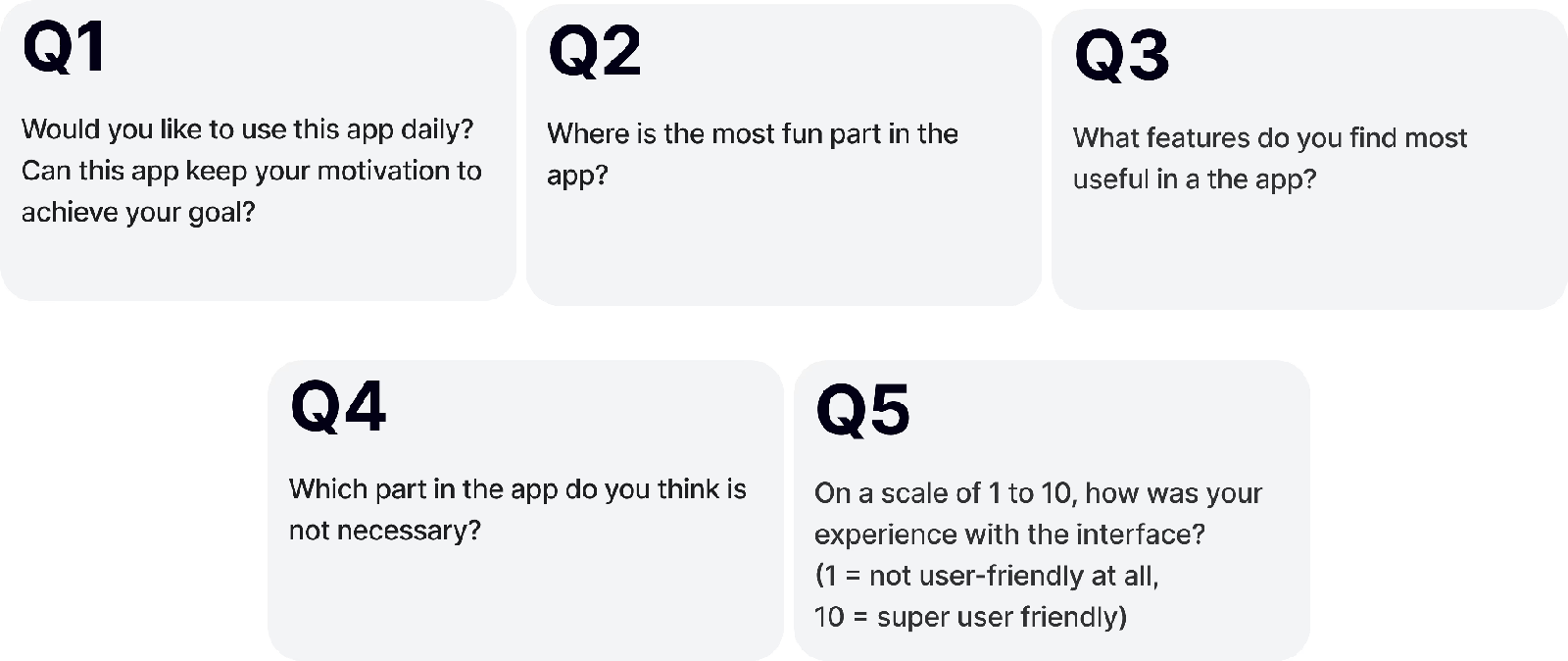
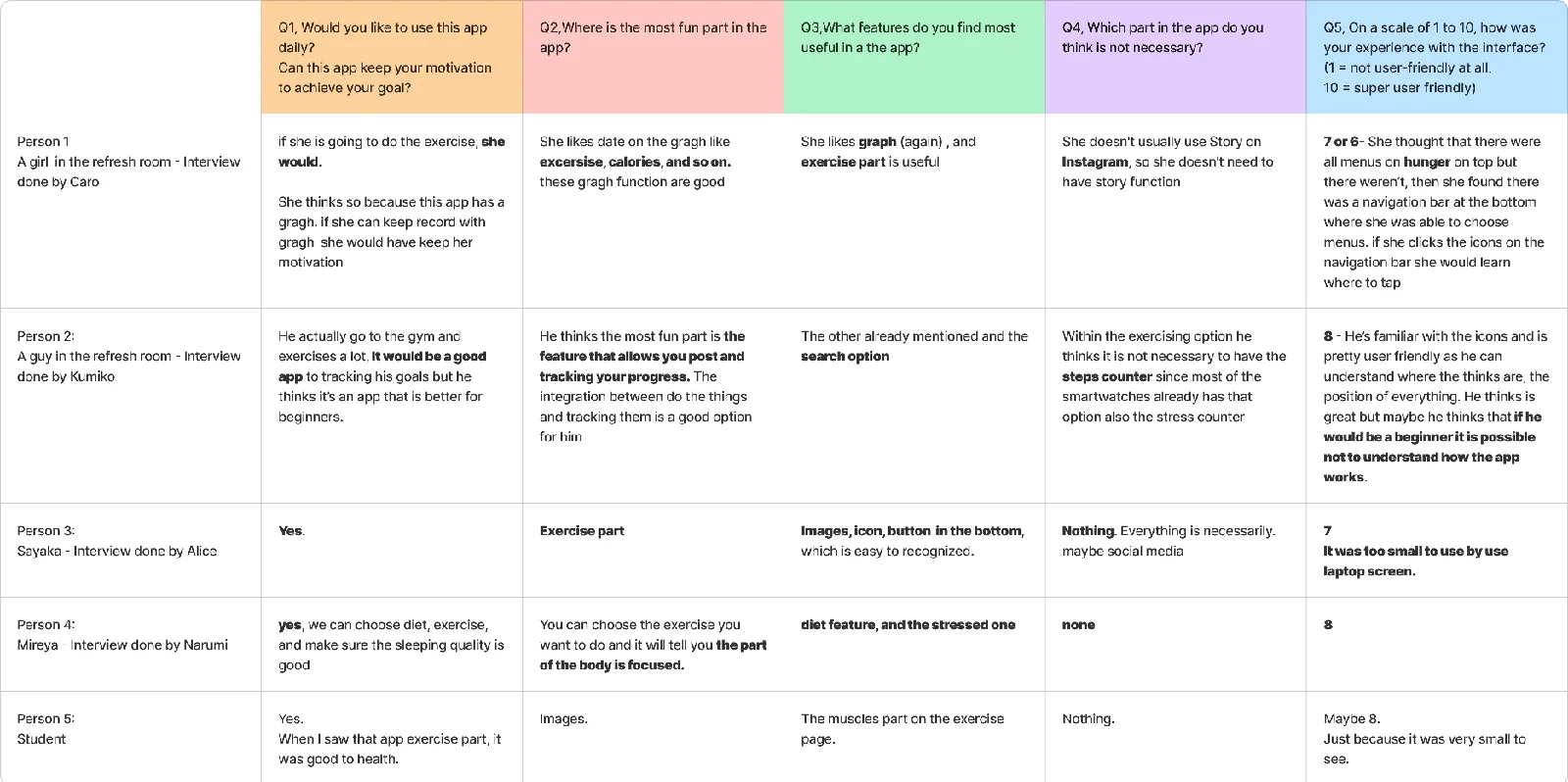
We conducted usability testing with real users to validate our design decisions and identify areas for improvement. The testing included task completion analysis and qualitative interviews.
Interview Questions

Interview Results

Usability Testing Heatmaps

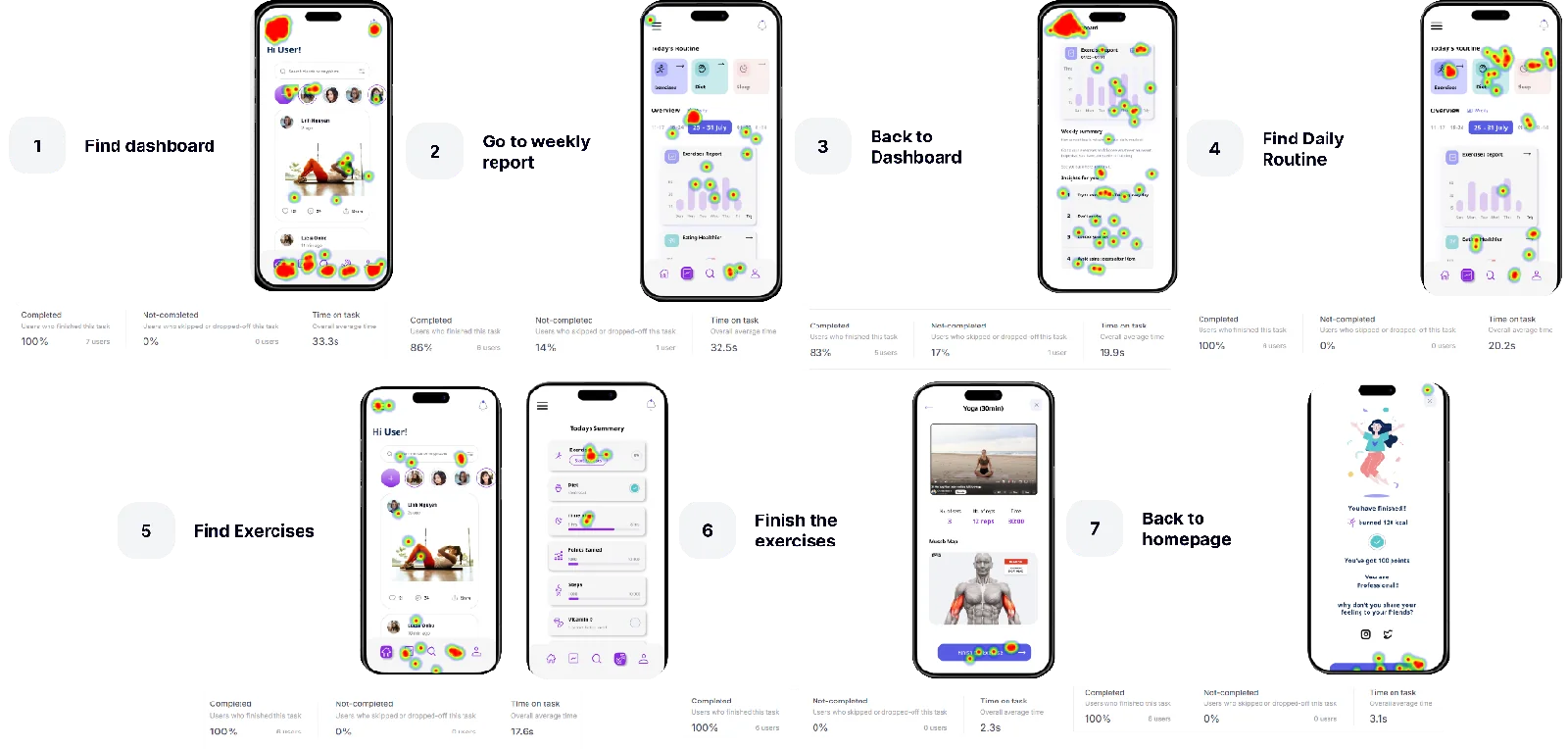
Task completion rates and heatmap analysis showing user interaction patterns
Team Collaboration
Behind the scenes of our 4-day design sprint: brainstorming sessions, sticky note ideation, sketching, and collaborative problem-solving with our team of 5 designers.

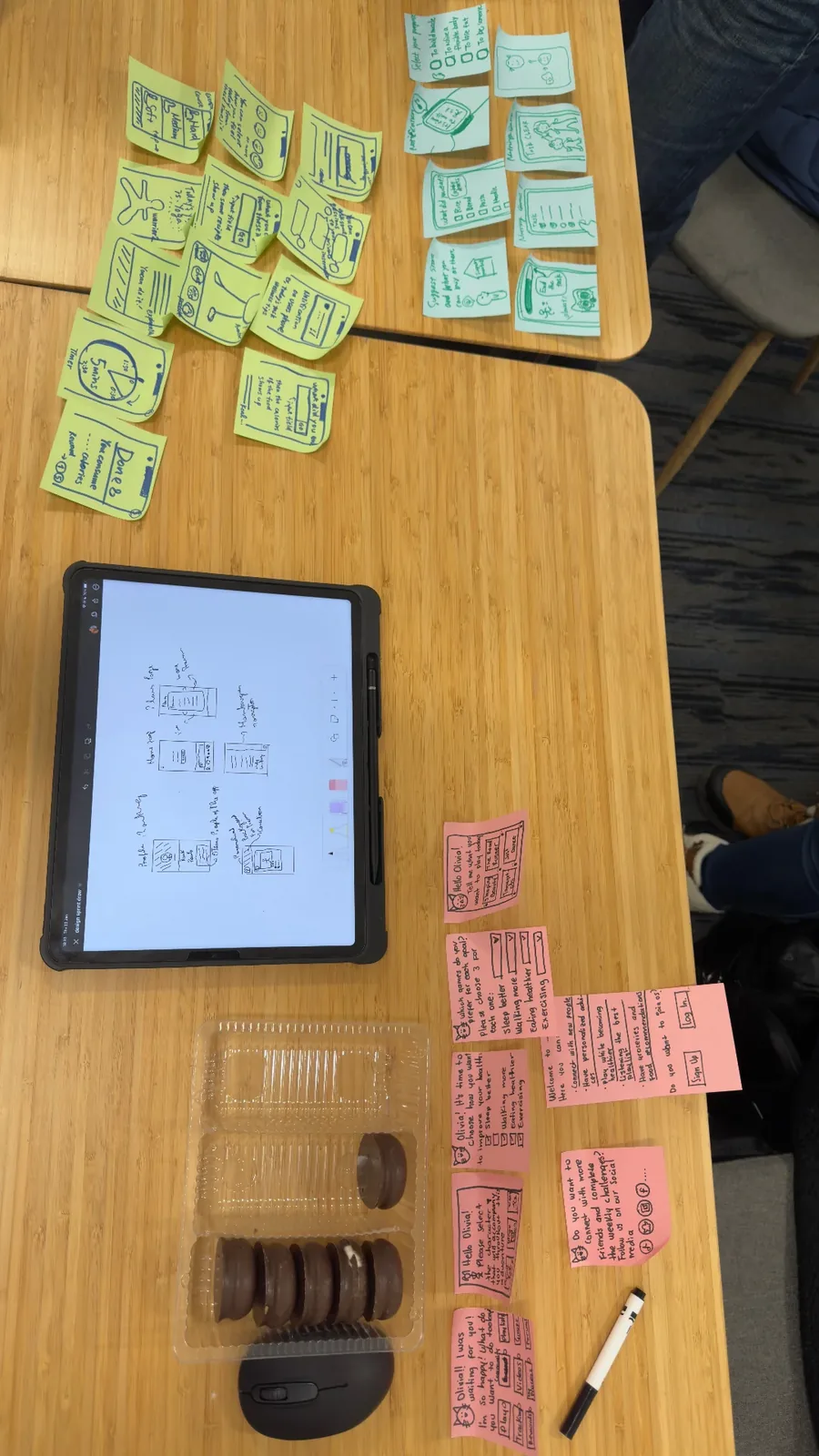
Ideation wall with sticky note sketches

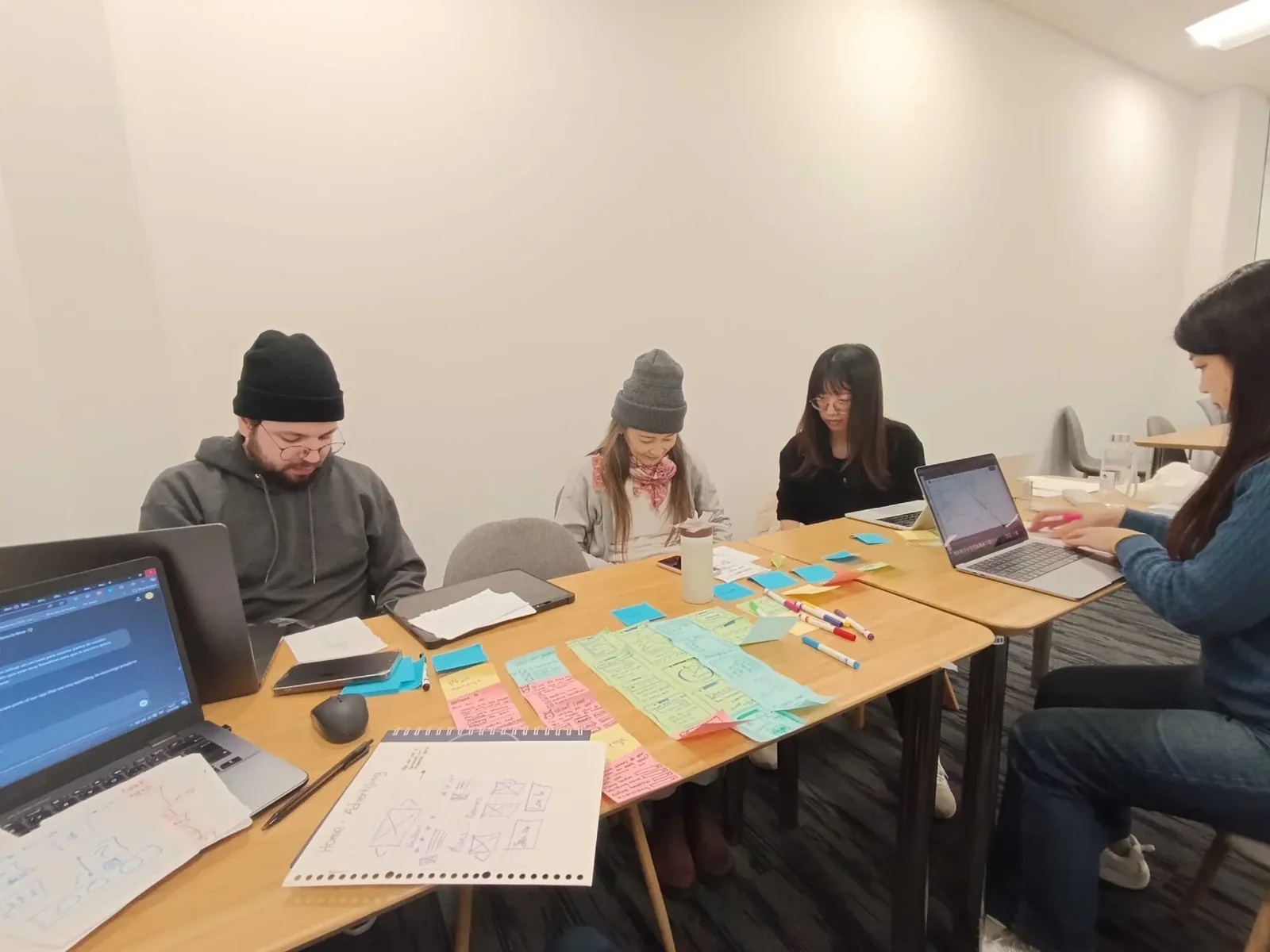
Team brainstorming session

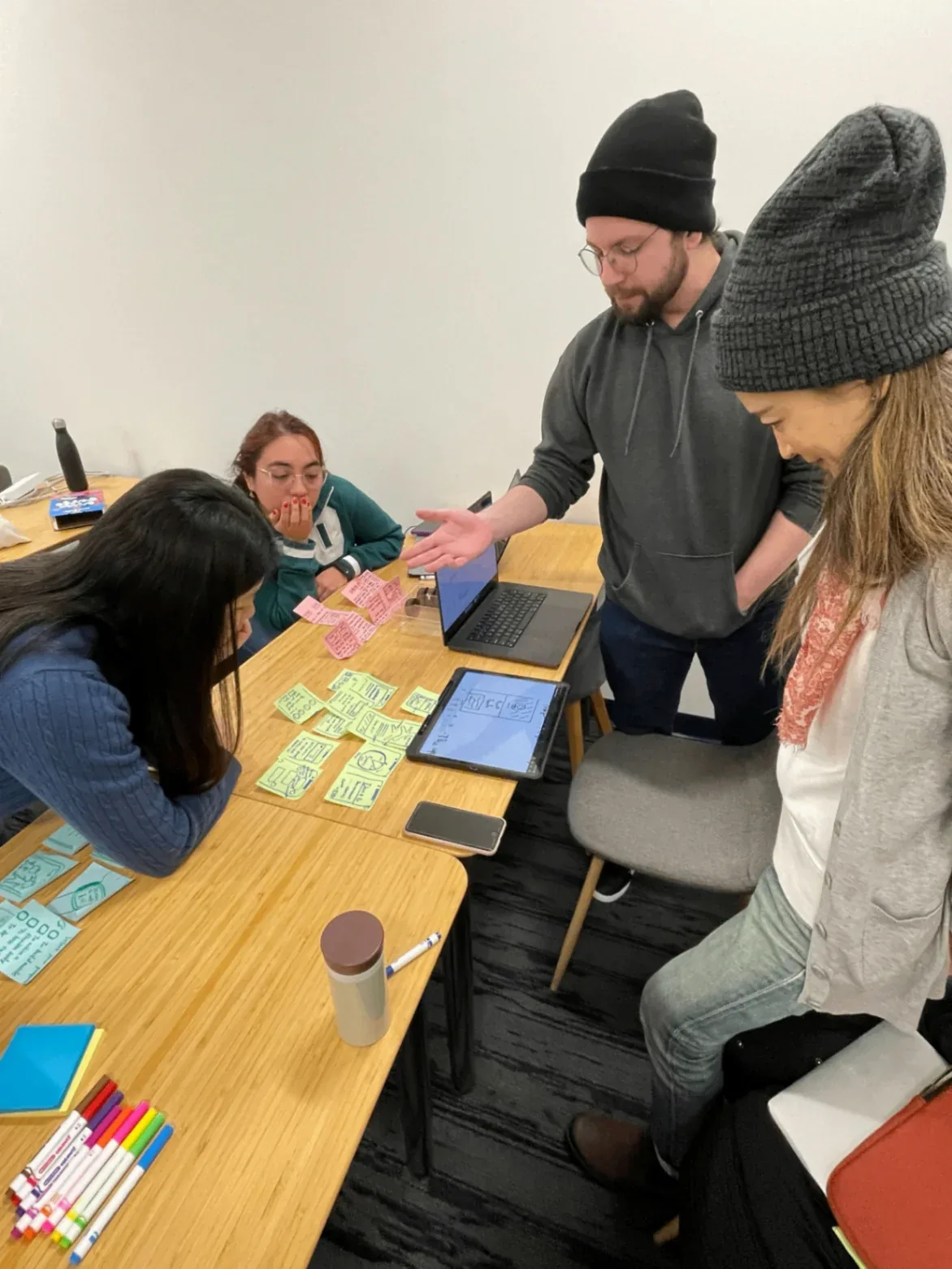
Discussing design concepts

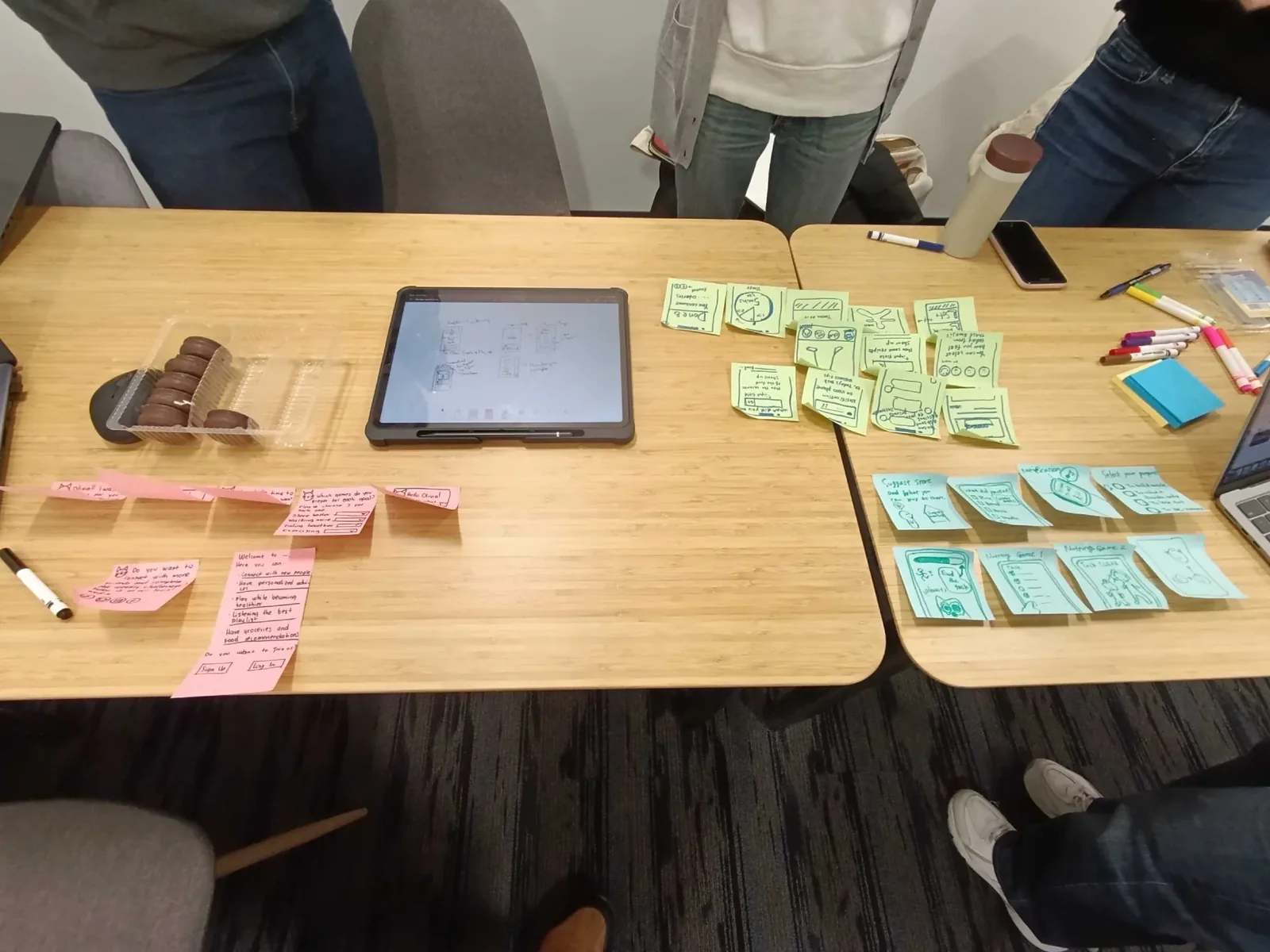
Sketches and storyboard planning

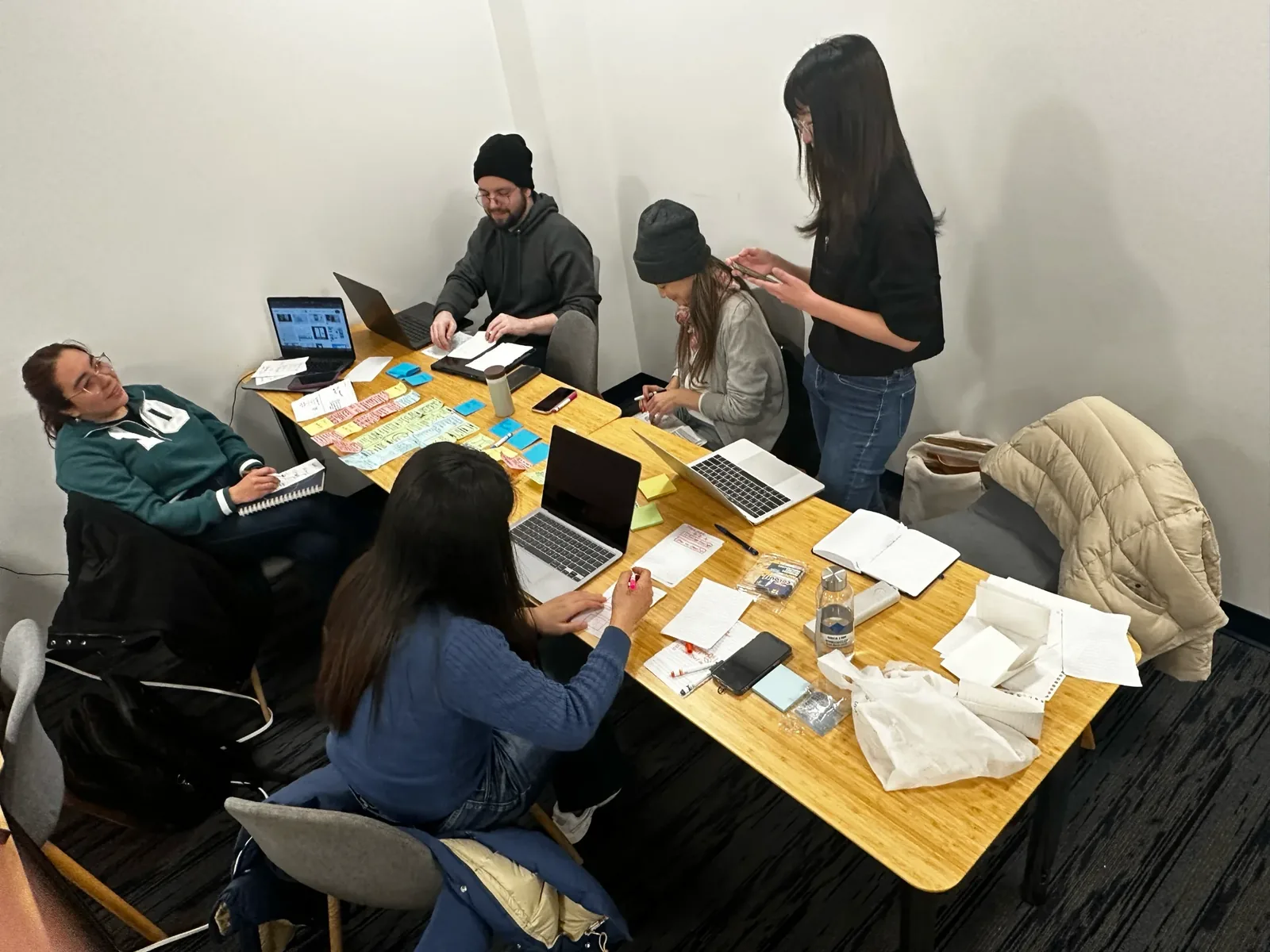
Collaborative problem-solving

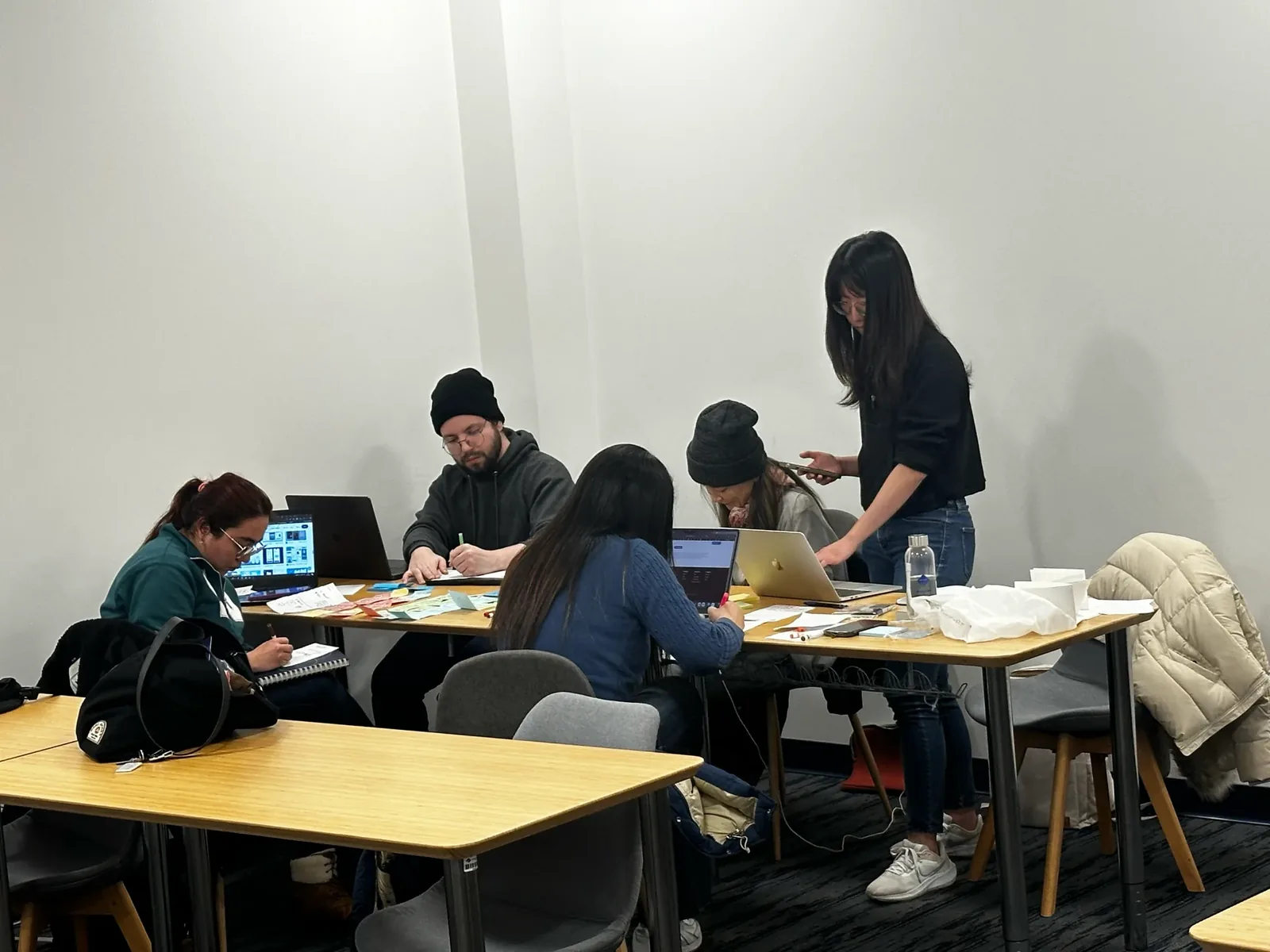
Working session in progress

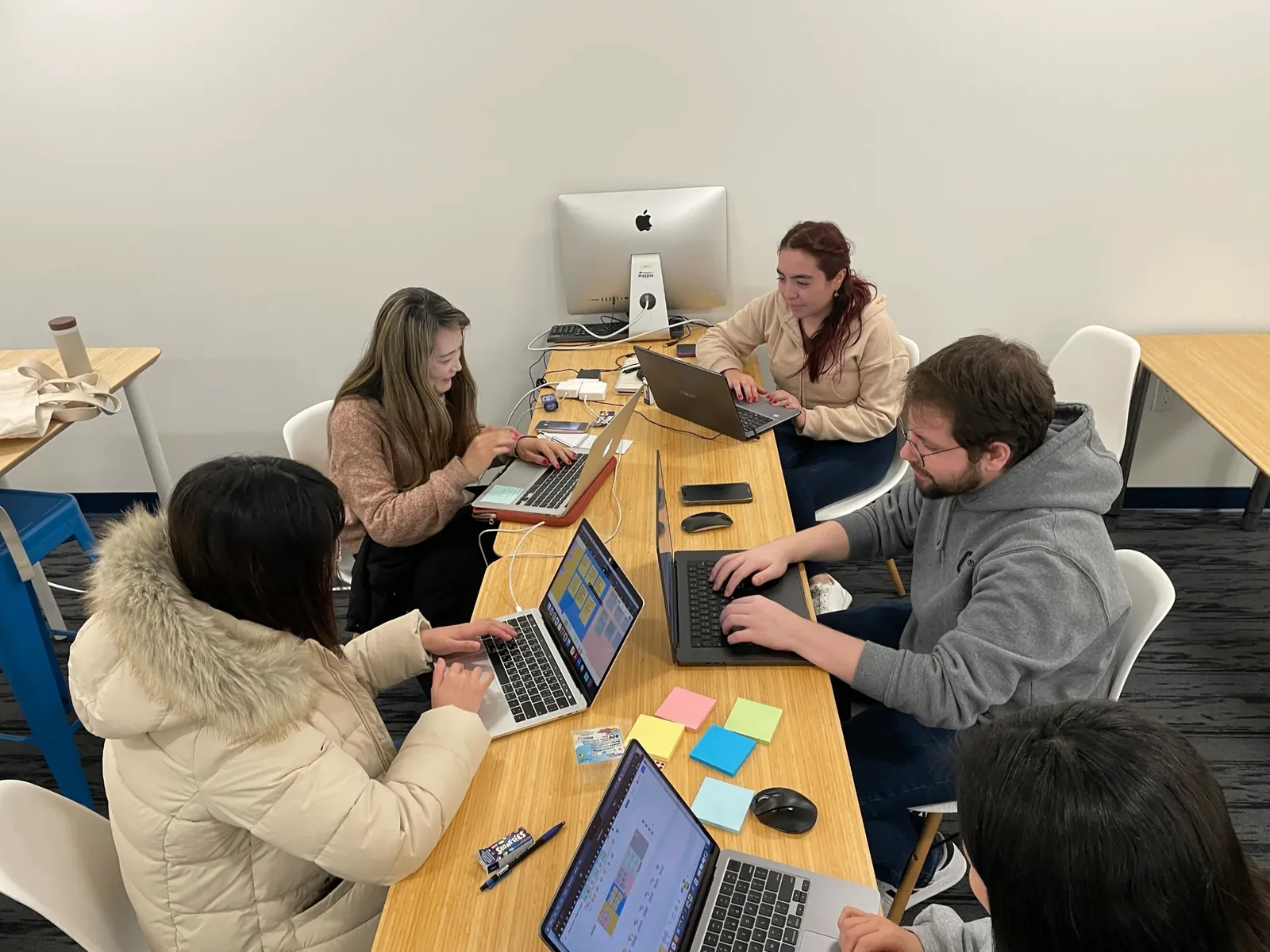
Team design session

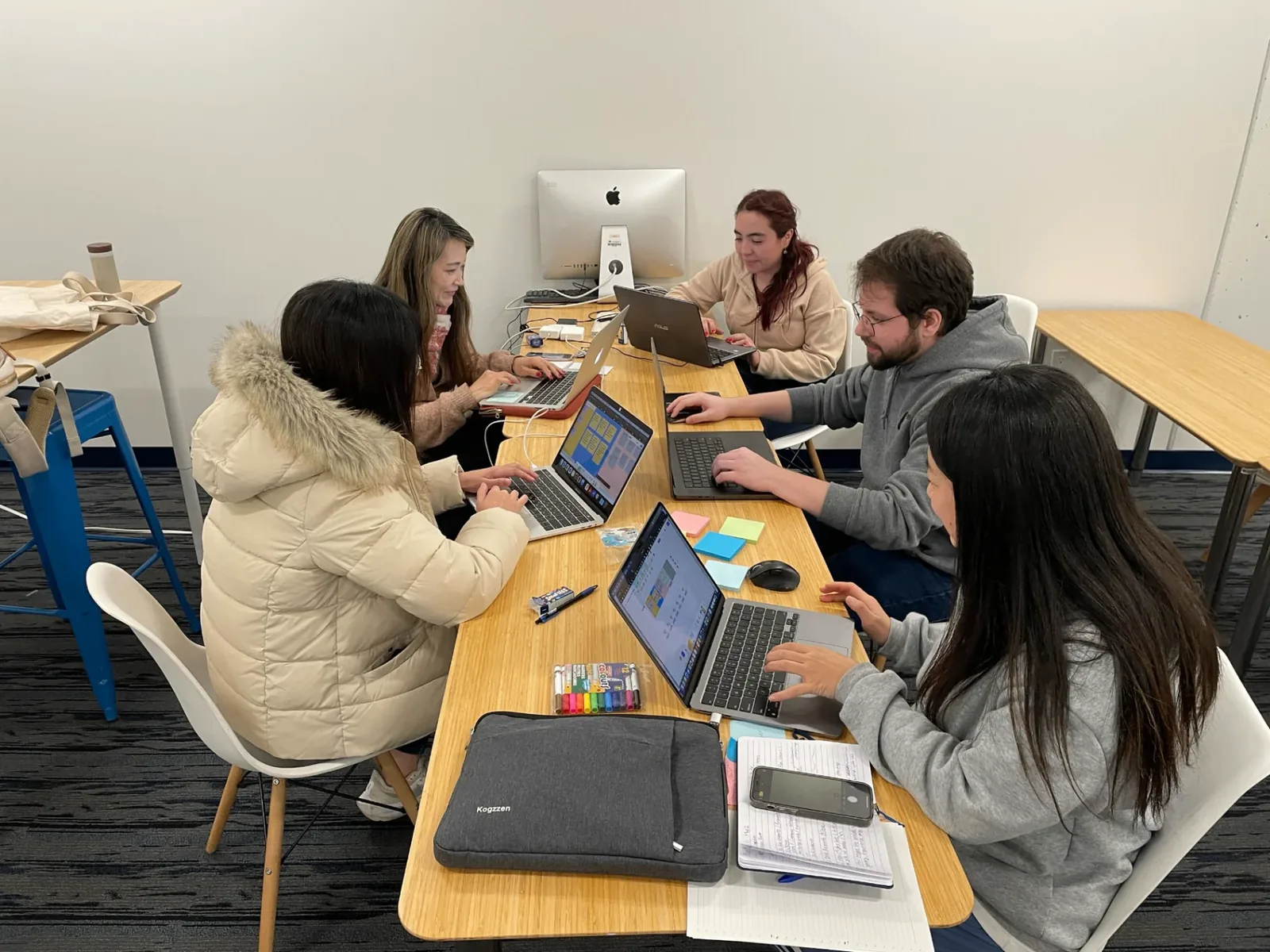
Full team collaboration

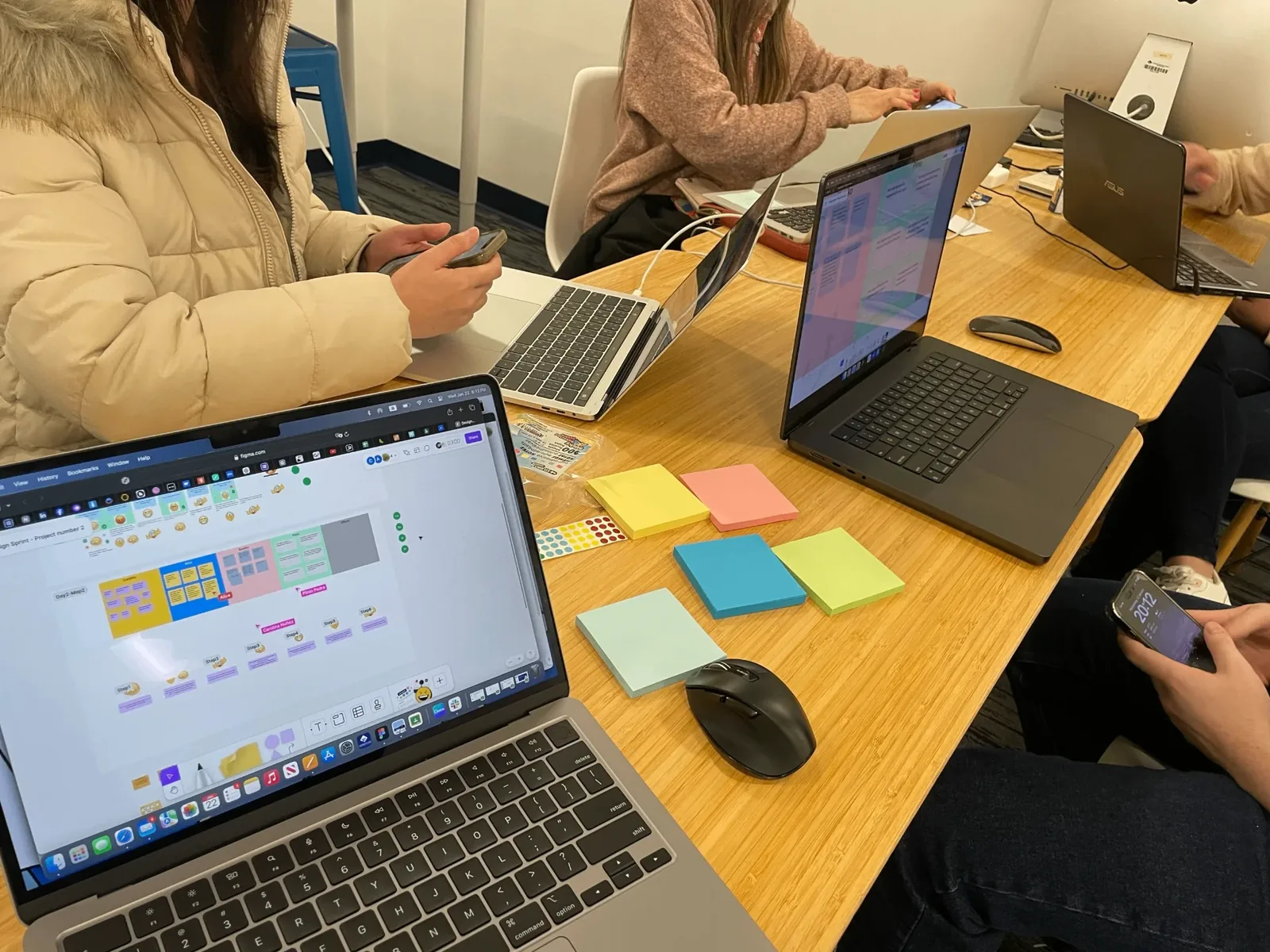
Working in FigJam

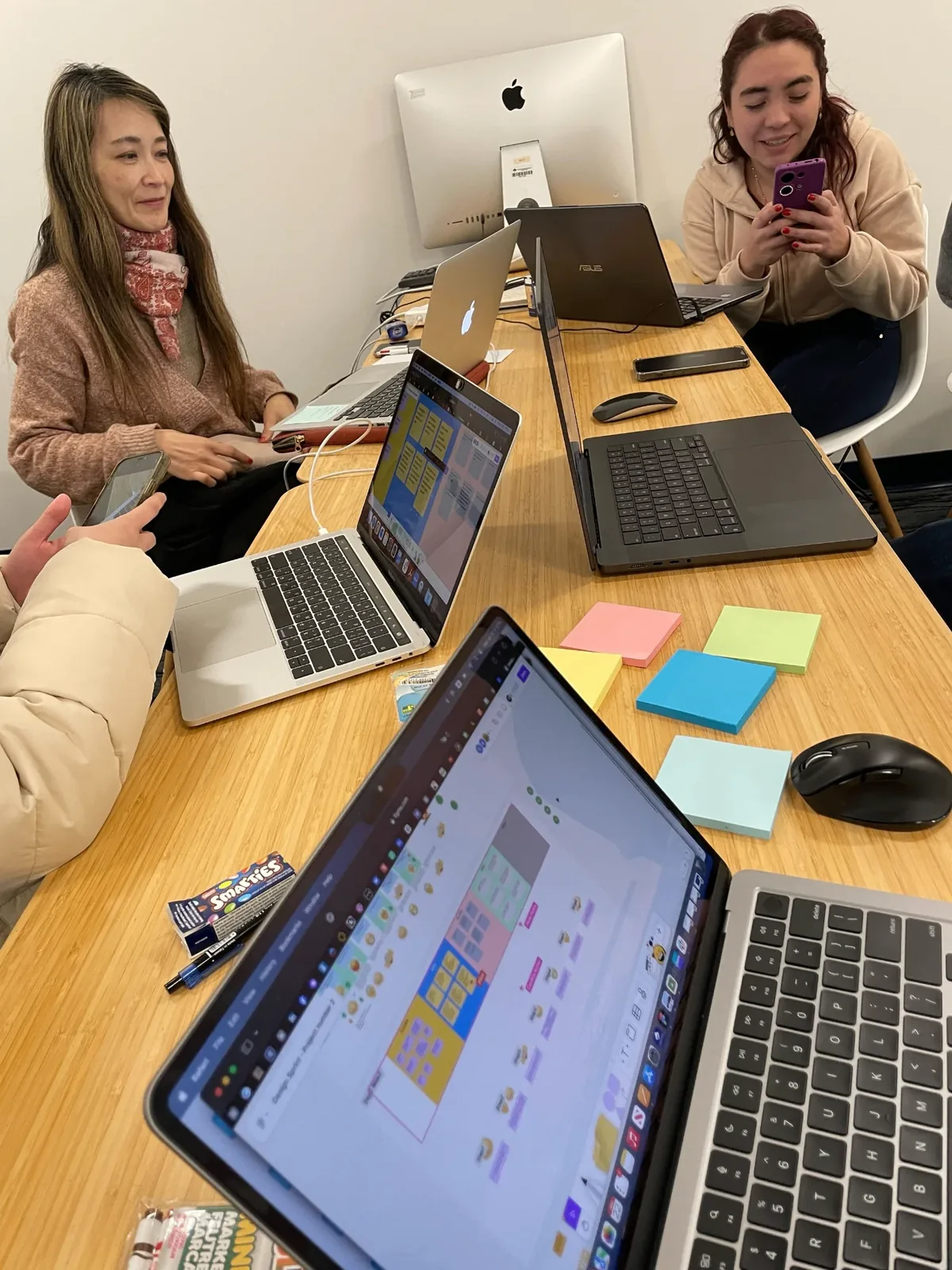
Designing in Figma
Learnings
- •A 4-day sprint forces decisions over deliberation. We learned more from one round of teen interviews than from a week of internal debate.
- •Gamification only works when it rewards the right behavior. Streaks for showing up beat points for vanity metrics.
- •Designing for teens means designing against shame. The biggest unlock was making the app feel private and self-paced, not performative.
Fit Fun Friends taught me that constraints sharpen design. With four days and five designers, we had no room for safe ideas, and the work was better for it. The hardest part was not generating concepts, but choosing which ones to kill so the remaining ones could actually be tested.
Future Improvements
- Add parental controls and progress dashboards for family visibility into teen activity
- Integrate wearable device data to auto-track physical activity and sync with challenges
- Introduce team-based challenges to strengthen social accountability and group motivation
- Build a content creator mode where teens can design custom workouts for friends
- Add mental wellness modules alongside physical health to create a holistic approach