Vancouver Service Design Jam 2025
A 2-day service design sprint (Saturday + Sunday), with only 12 hours of work time.



The Product
A 48-hour rapid service design sprint at the Vancouver Service Design Jam 2025, where our interdisciplinary team of 5 created a community-driven concept connecting creative professionals through shared spaces and events.
Product Designer
48-Hour Jam
What this project achieved
Designed a service concept connecting artists to public spaces through a low-barrier, phone-based prototype.
Judges praised the prototyping quality and community-building potential of the concept.
My Contribution
- Collaborated in a 5-person team under tight time constraints
- Conducted rapid street research / field interviews to validate service direction
- Supported ideation and service concept development
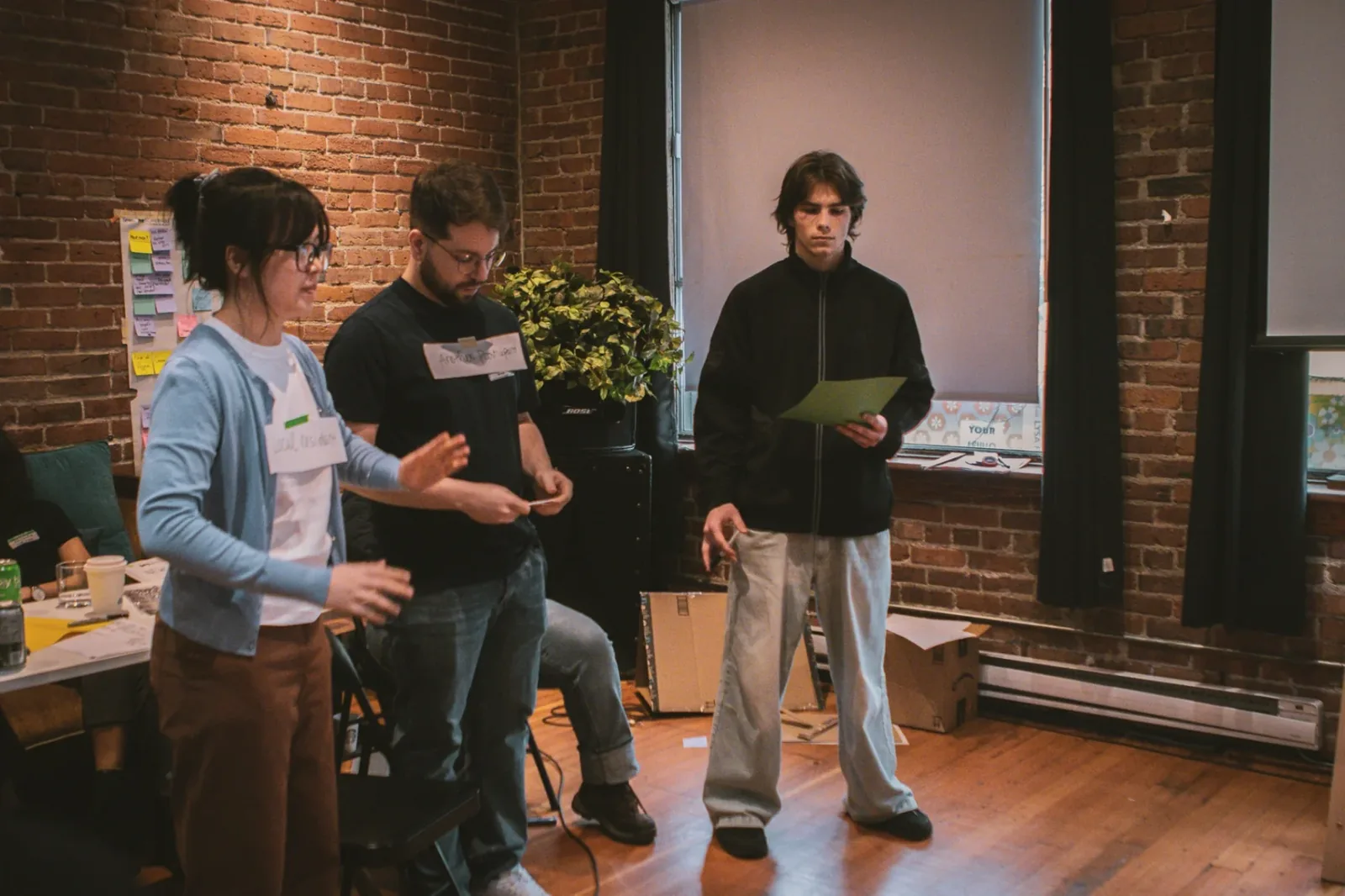
- Helped communicate the service experience through theater-style storytelling
Gallery
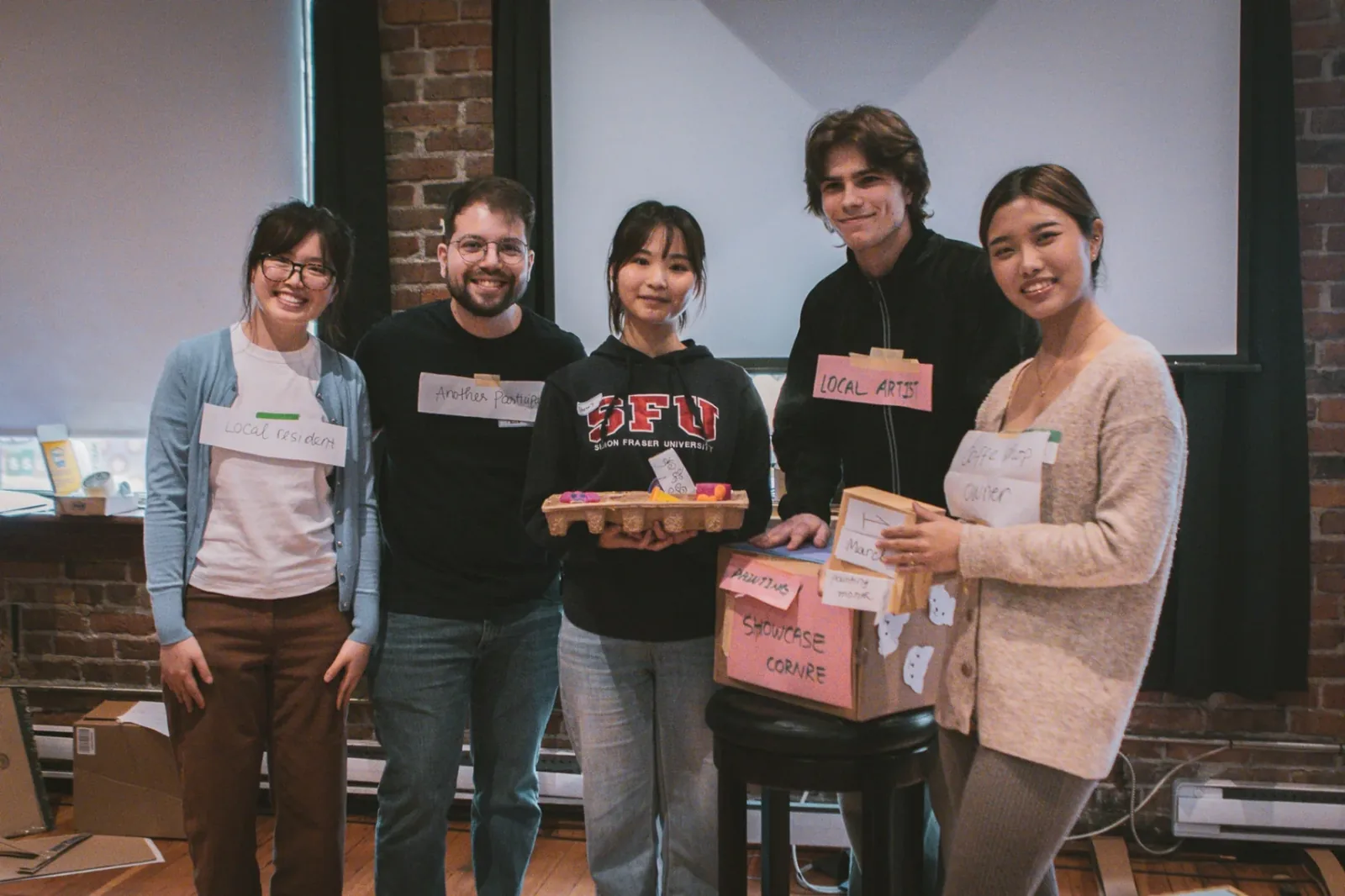
Team presenting the final service concept with props
Theater-style presentation in action
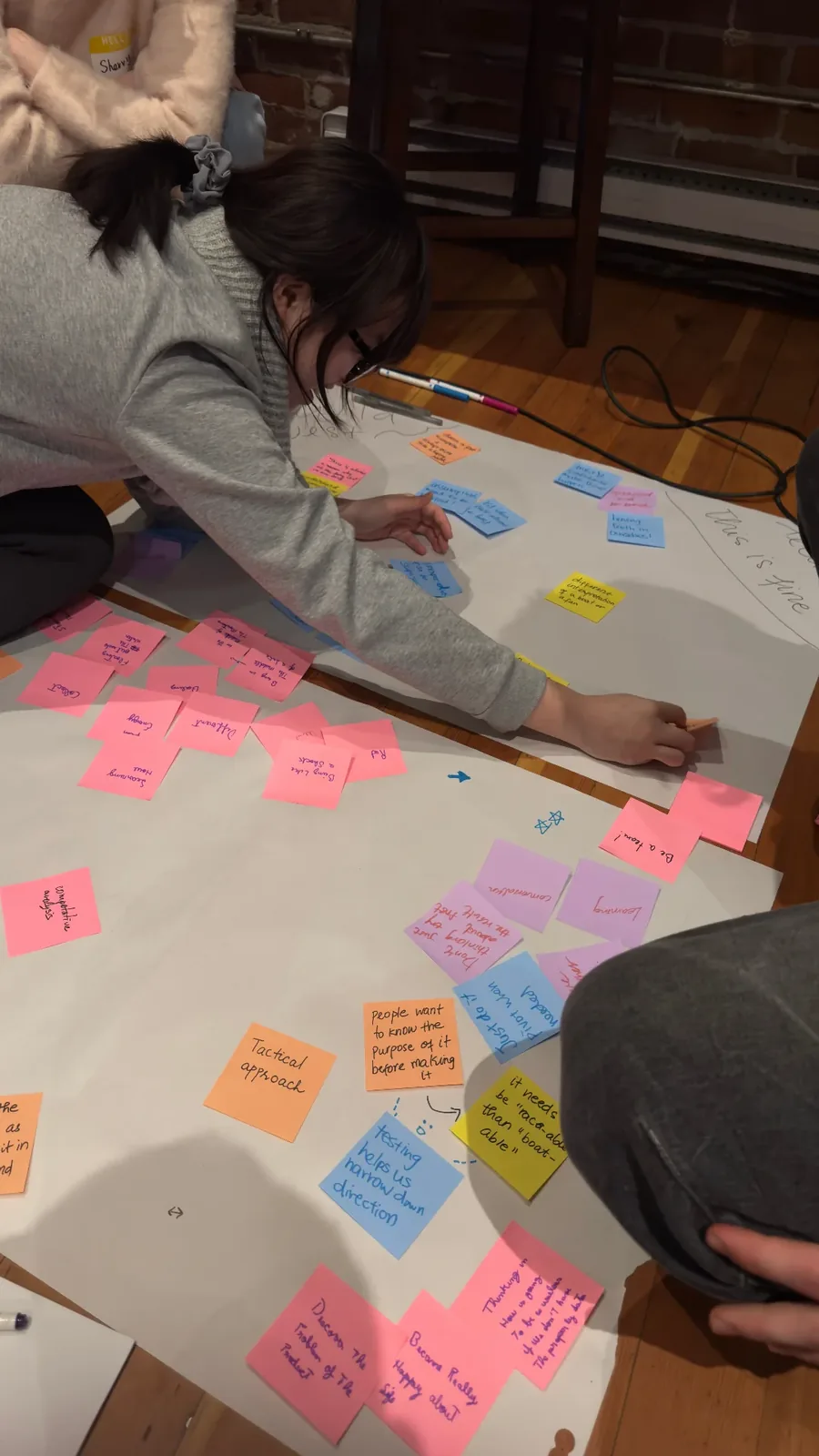
Organizing insights with sticky notes

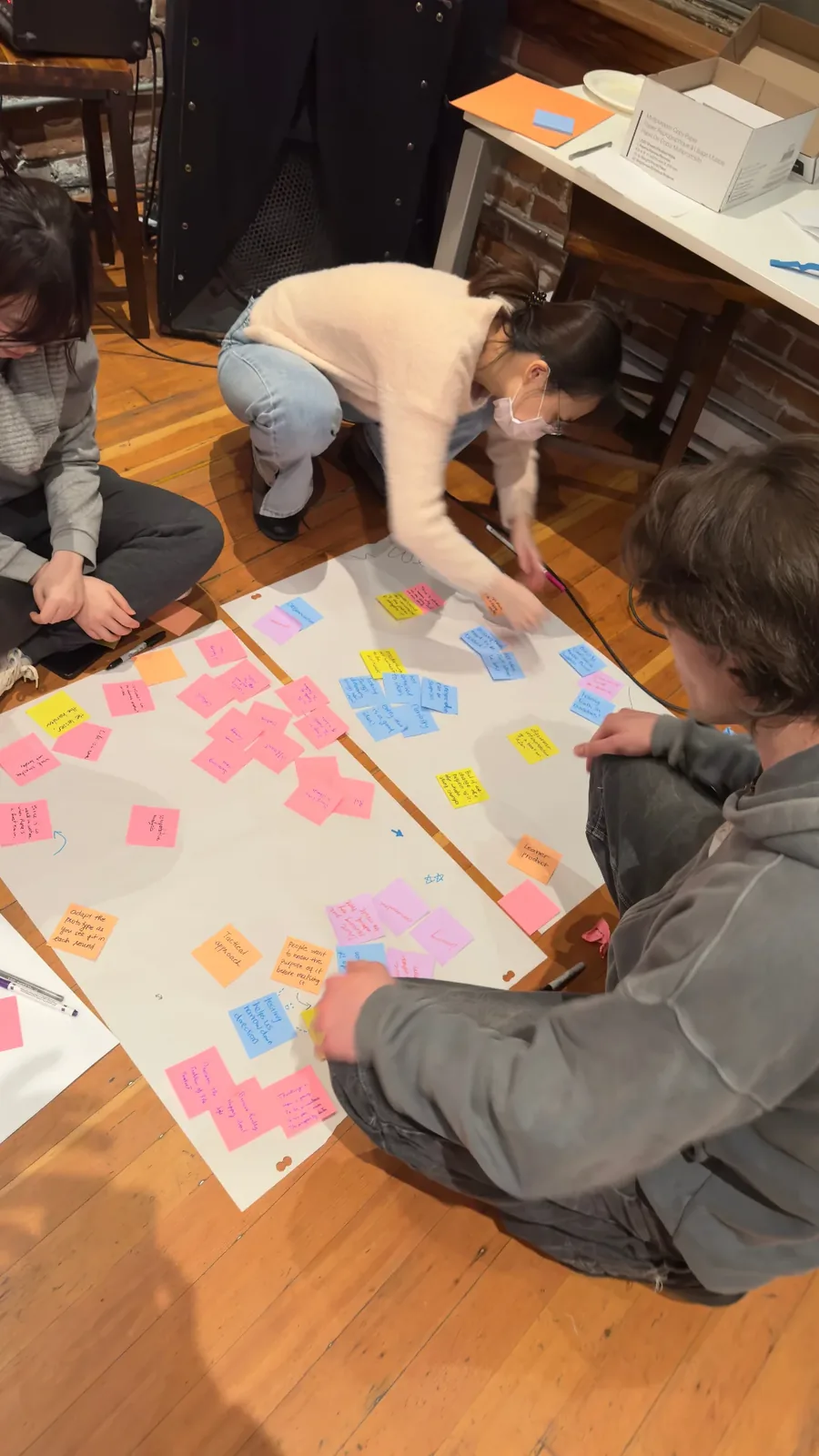
Team collaboration during ideation session

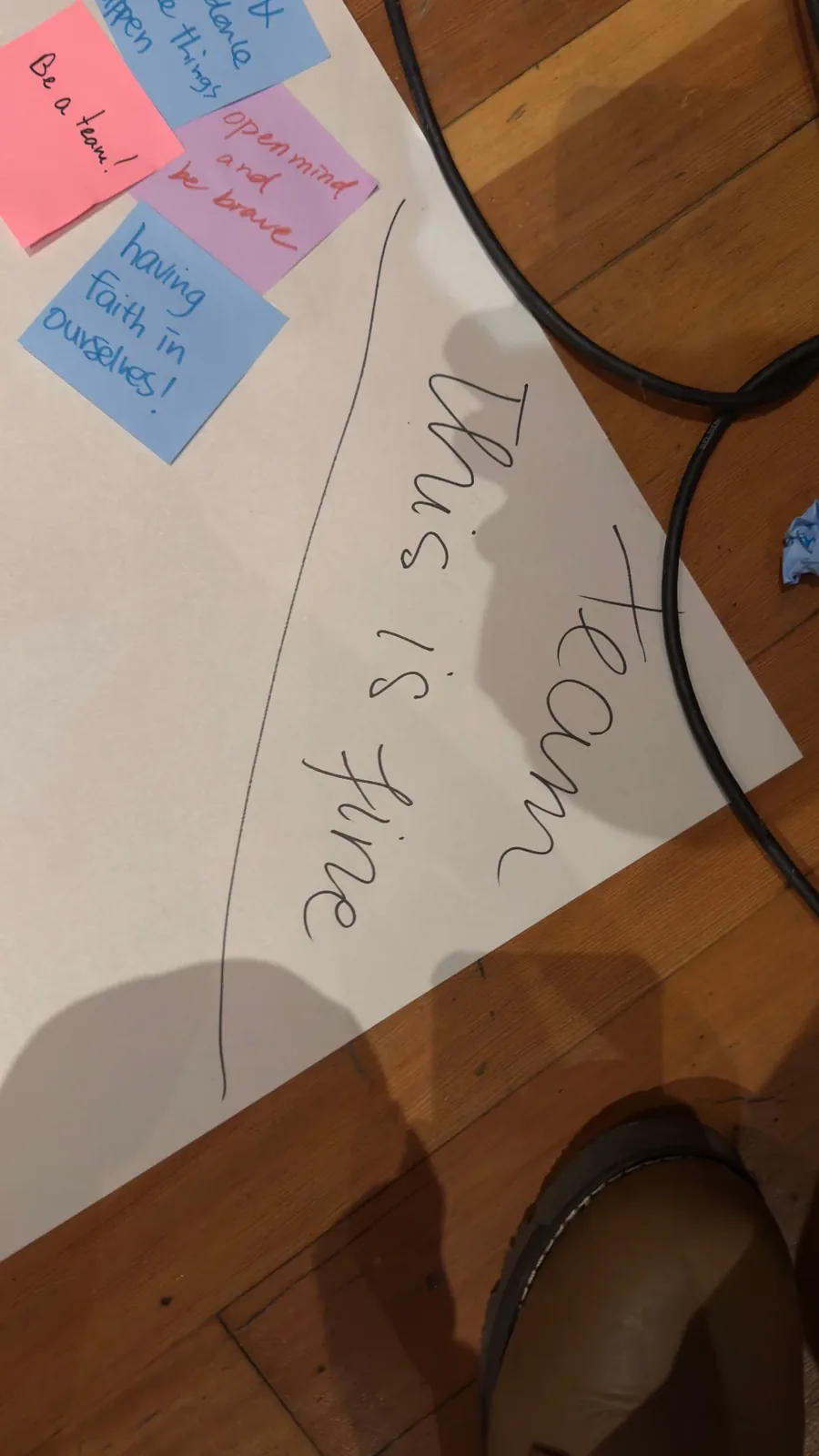
"Team This is Fine" - our team identity

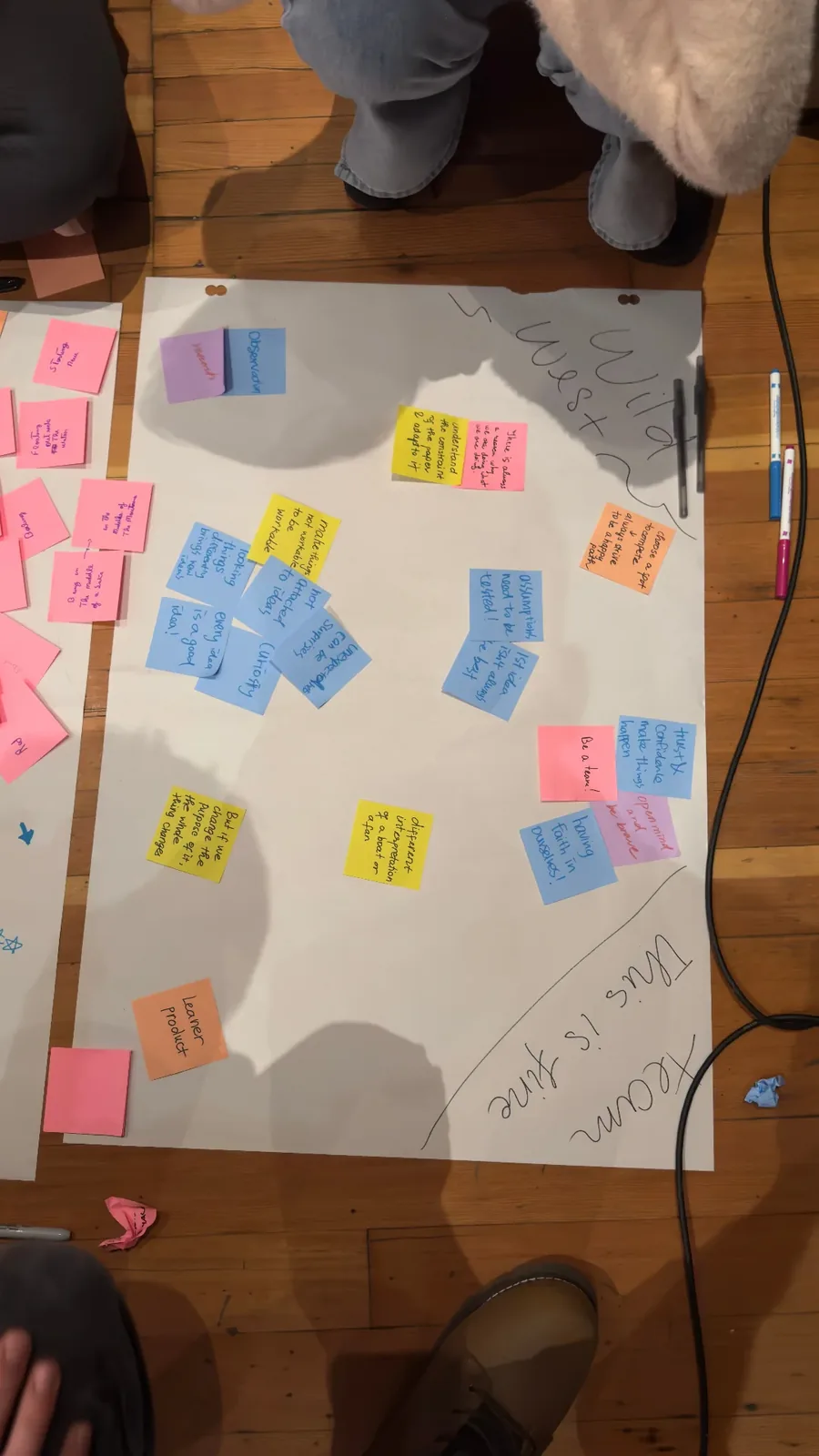
Affinity mapping with ideas from team members

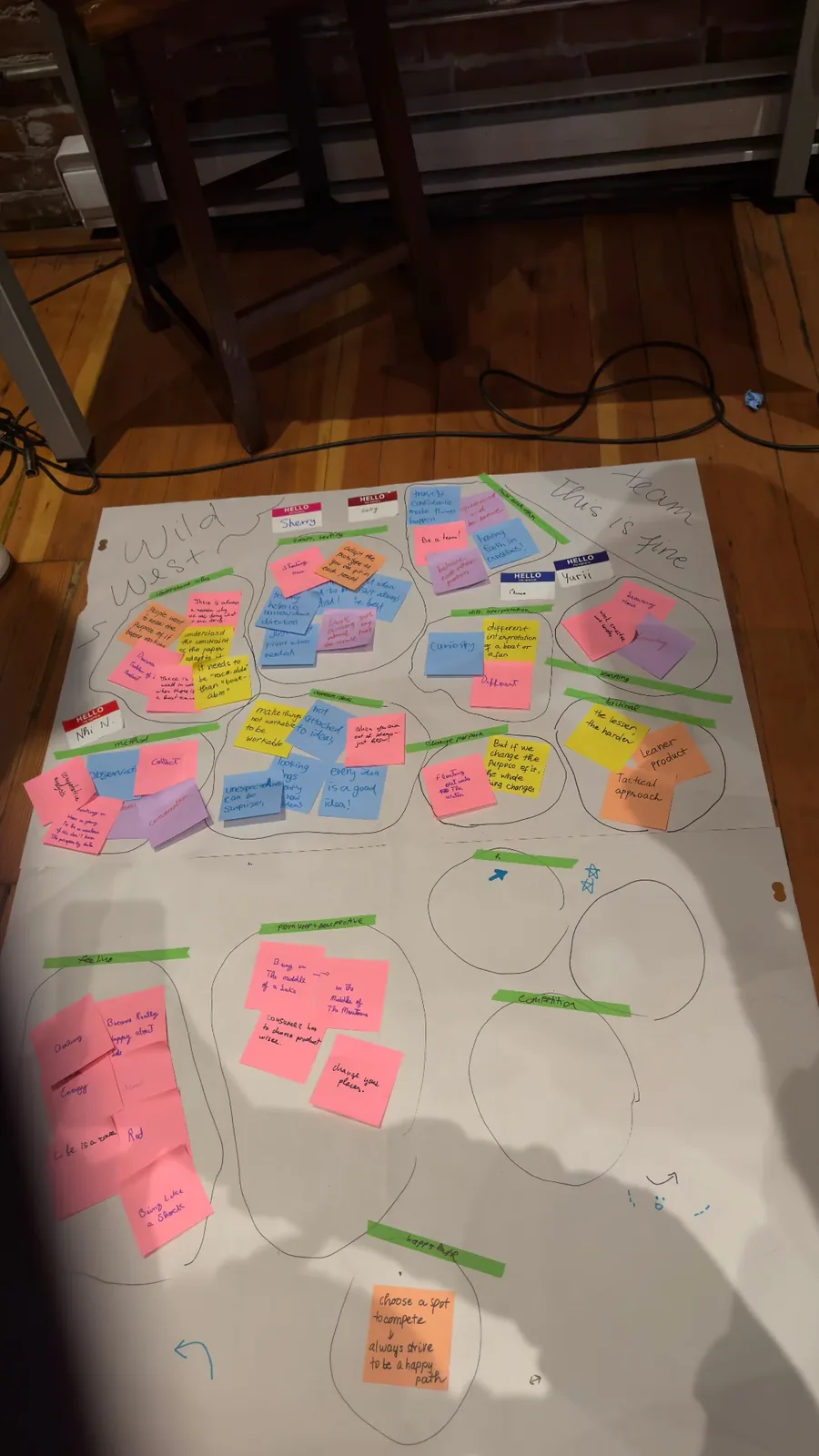
"Wild West" ideation board with grouped themes

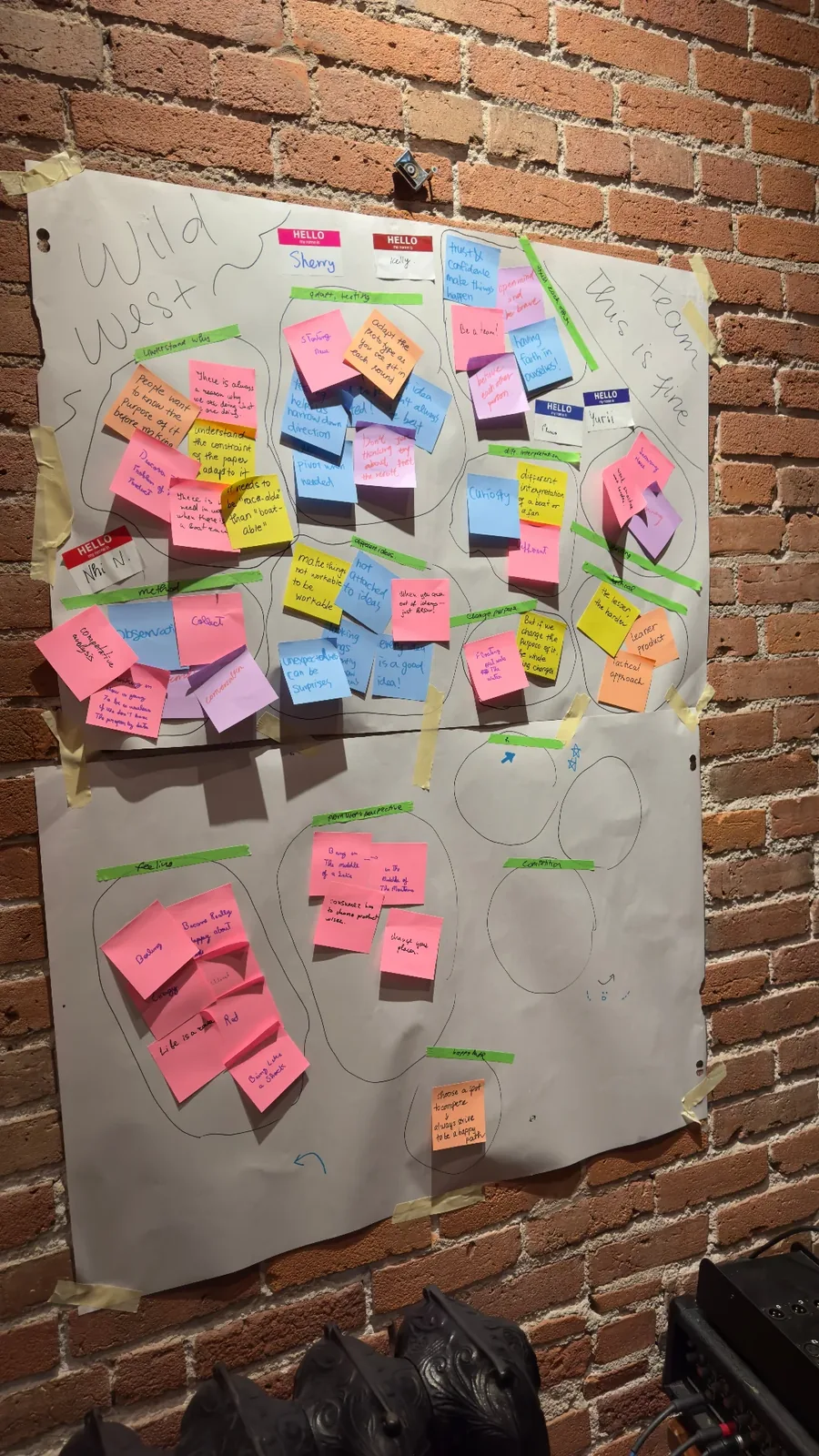
Full ideation wall on display

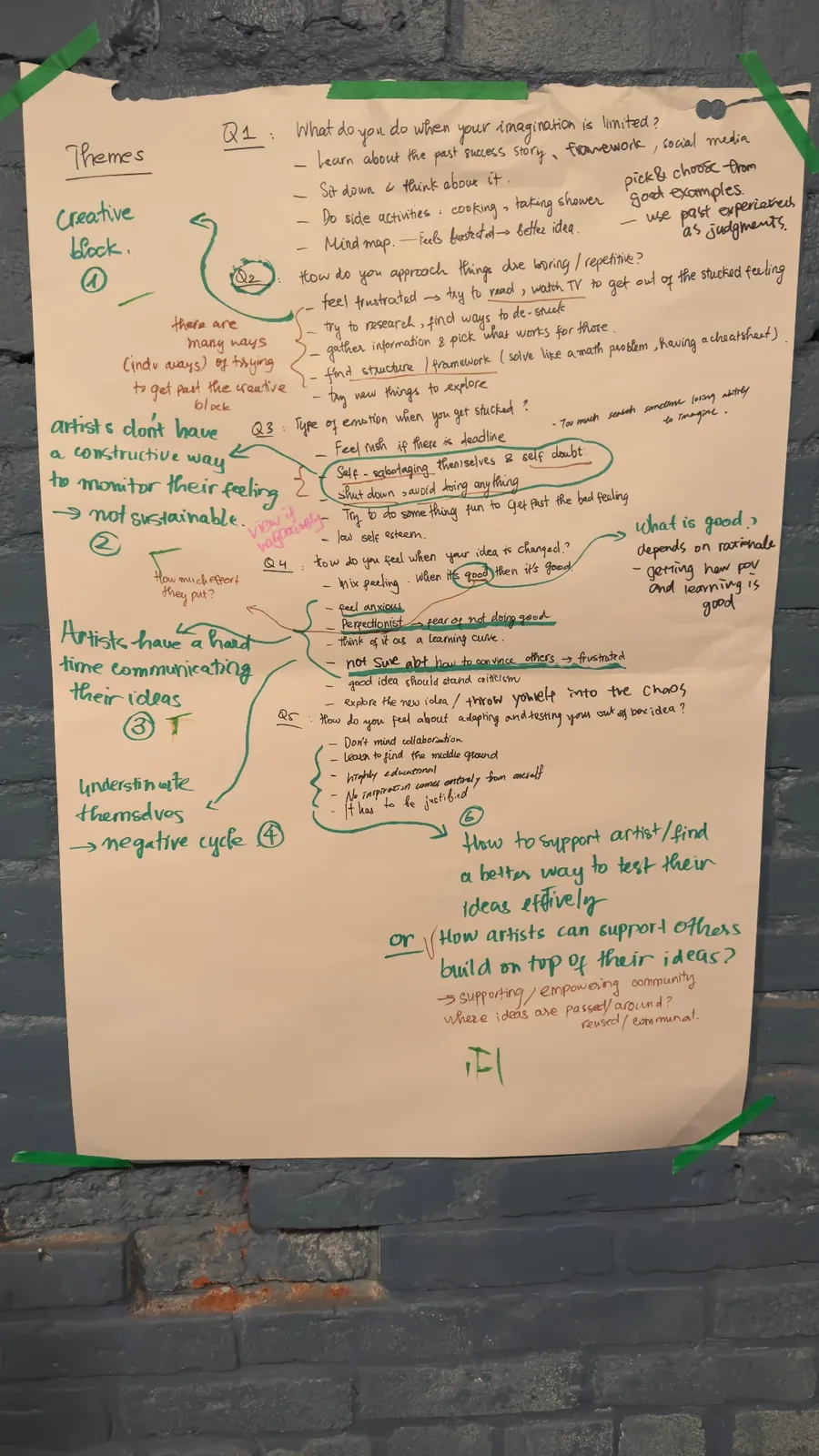
Interview findings and creative block themes

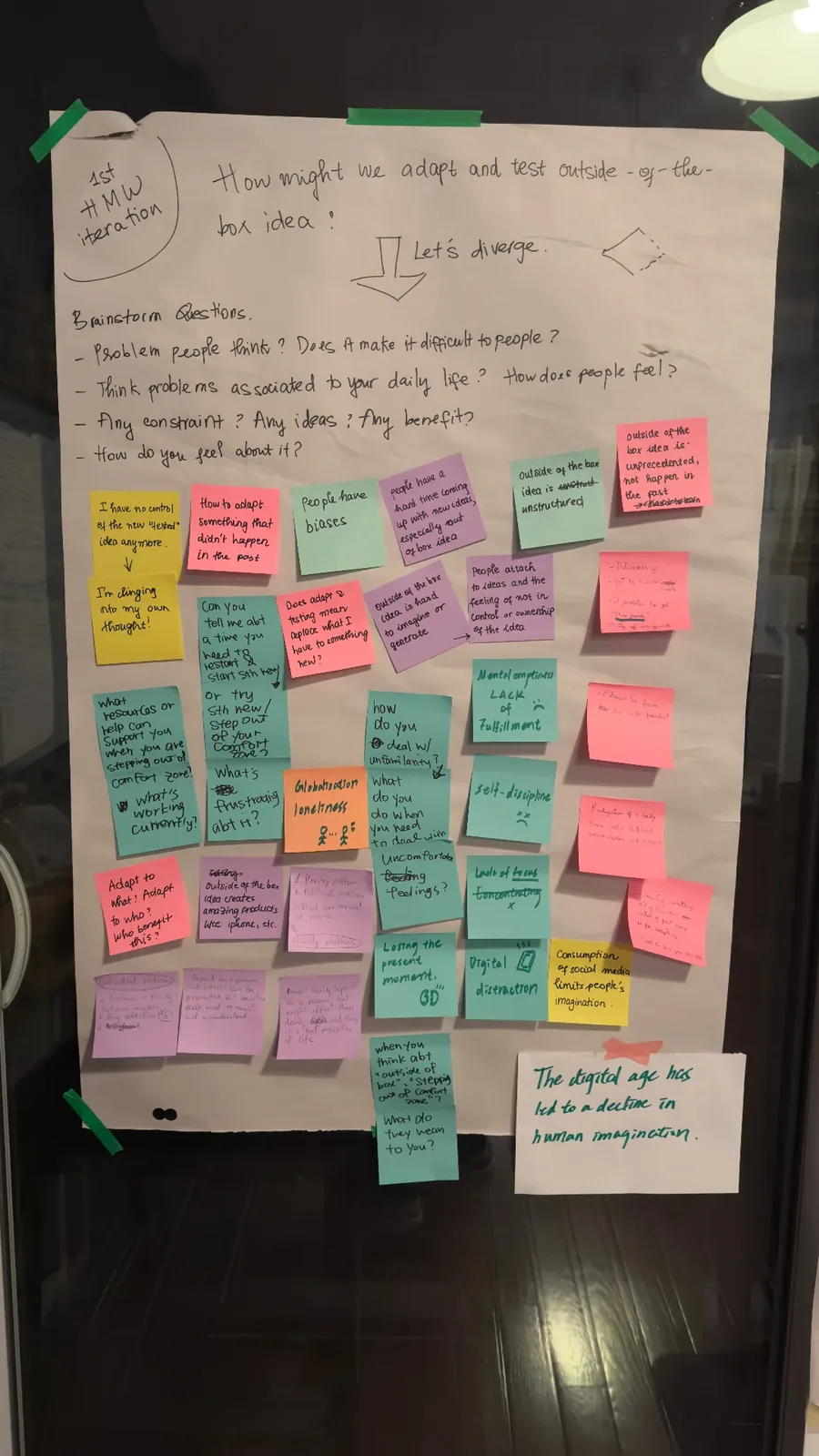
HMW (How Might We) brainstorming session

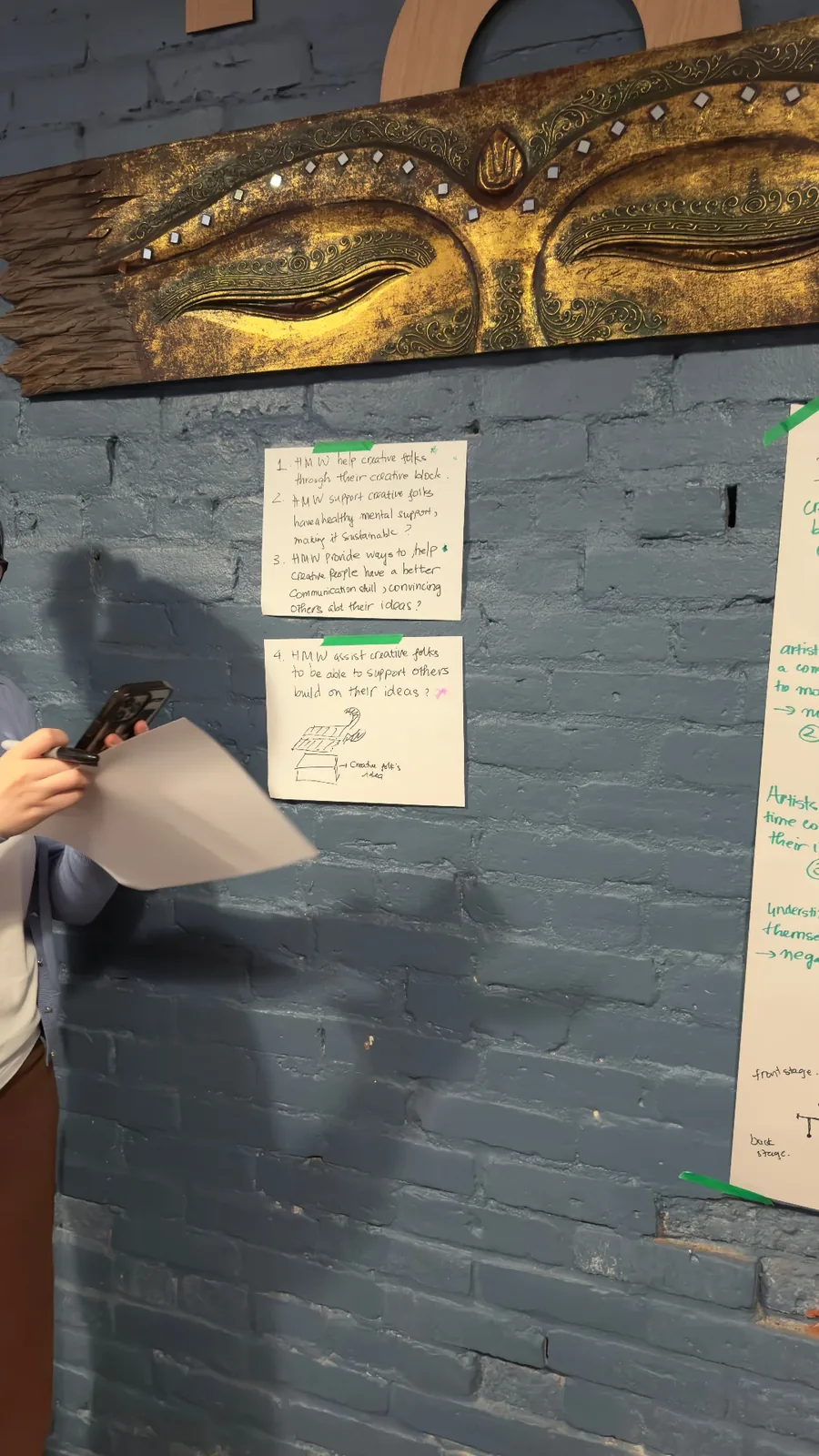
Defining problem statements

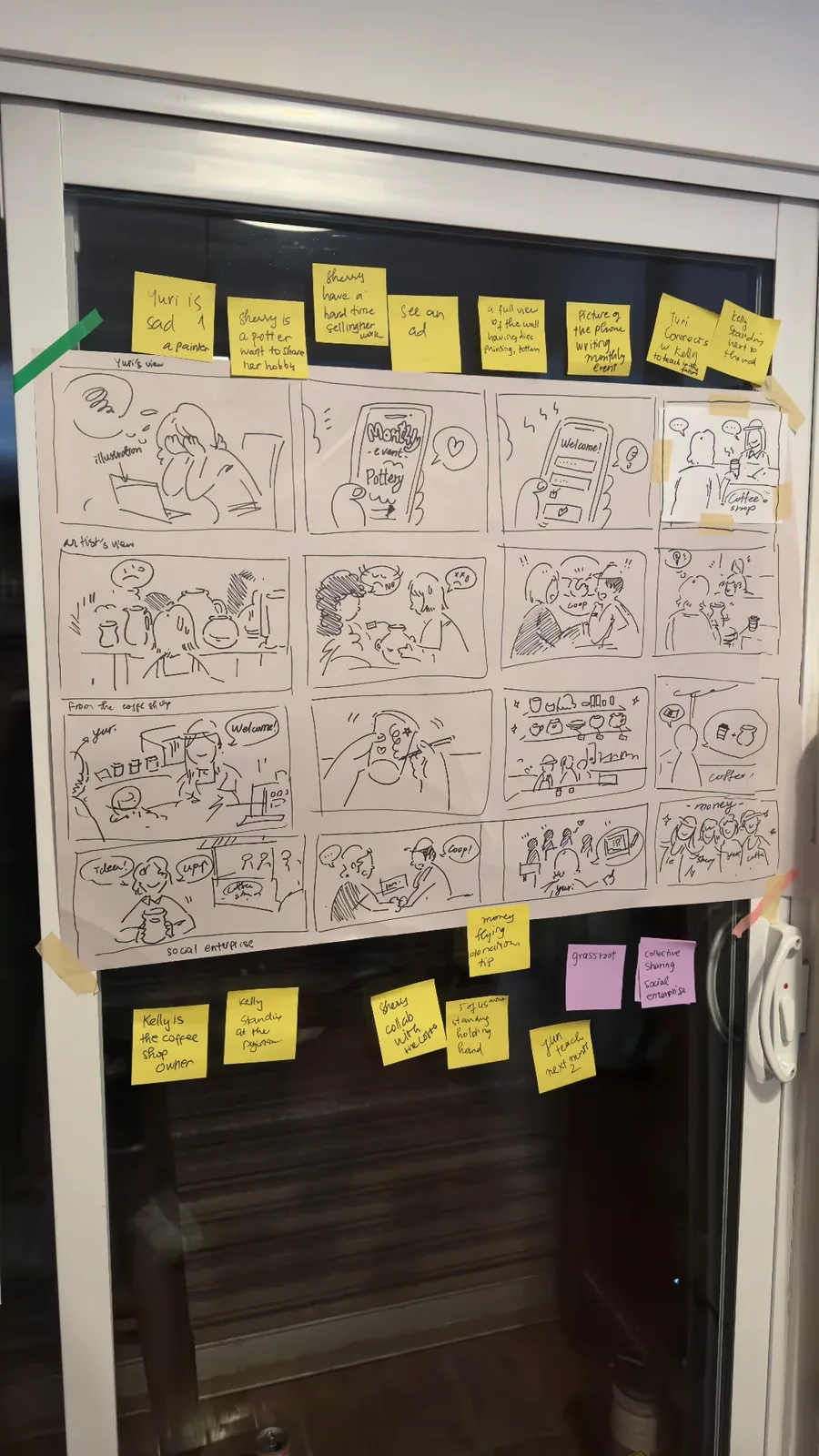
Service storyboard with user journey

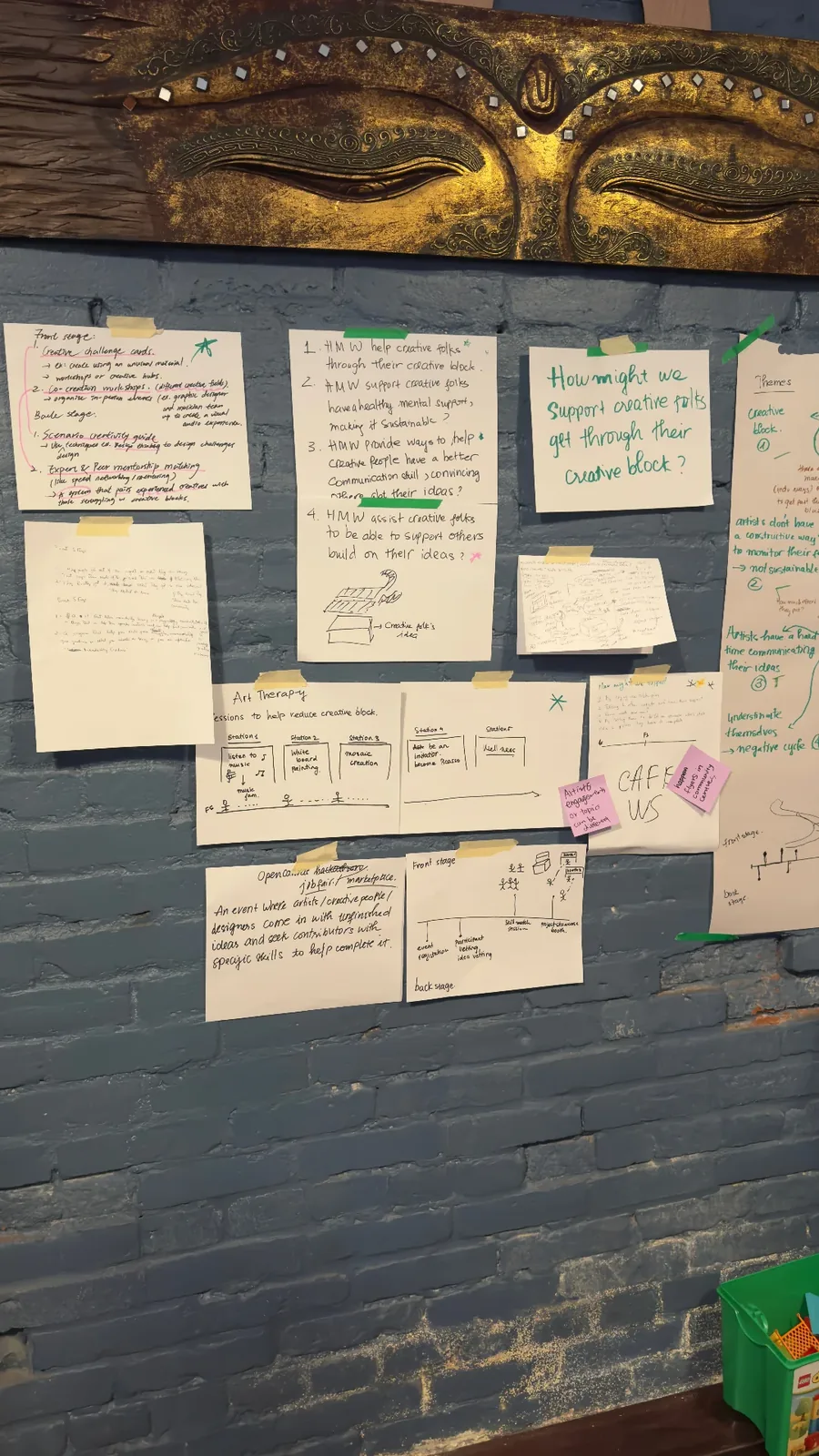
Service concept development wall

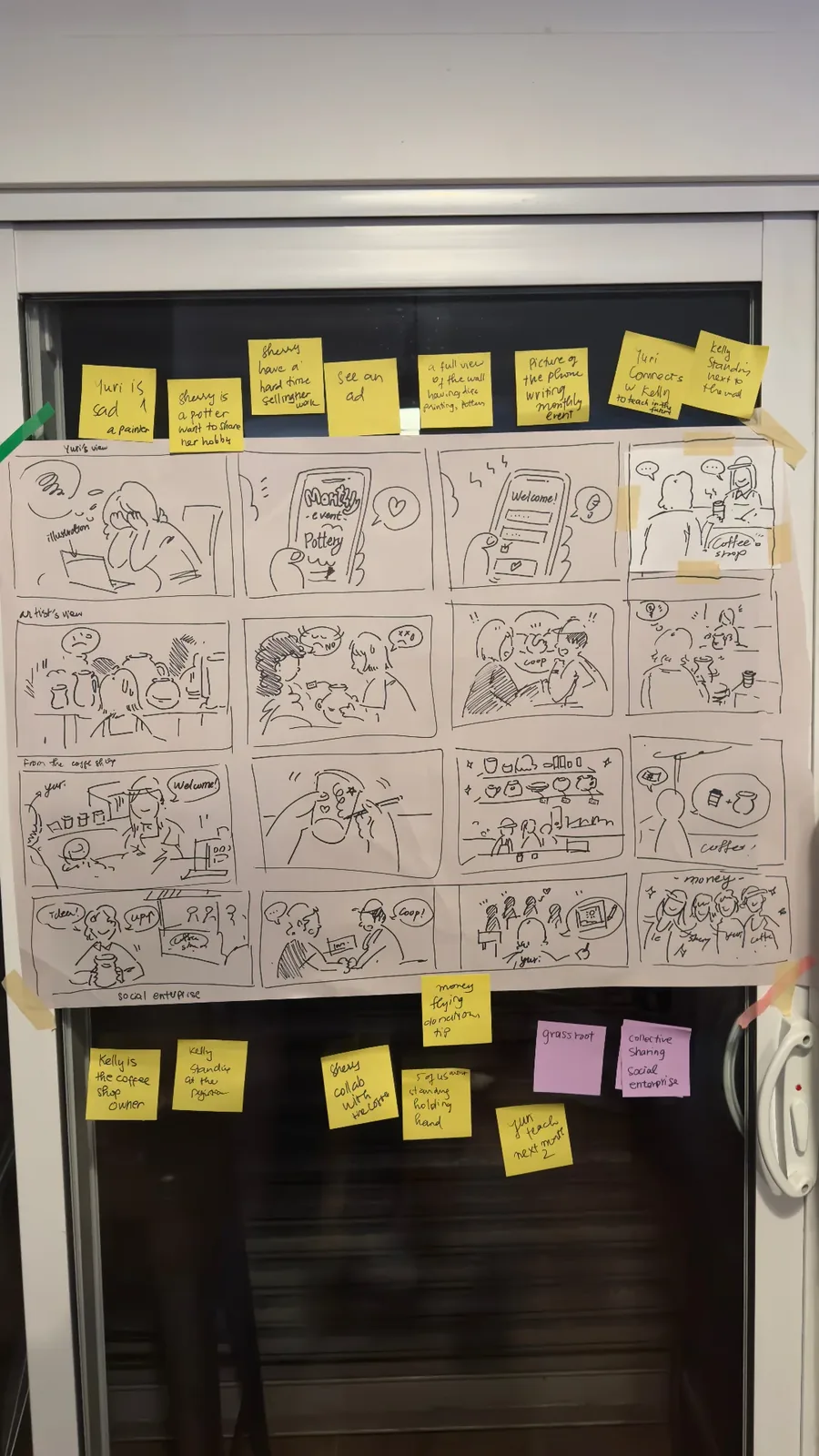
Detailed storyboard with user scenarios

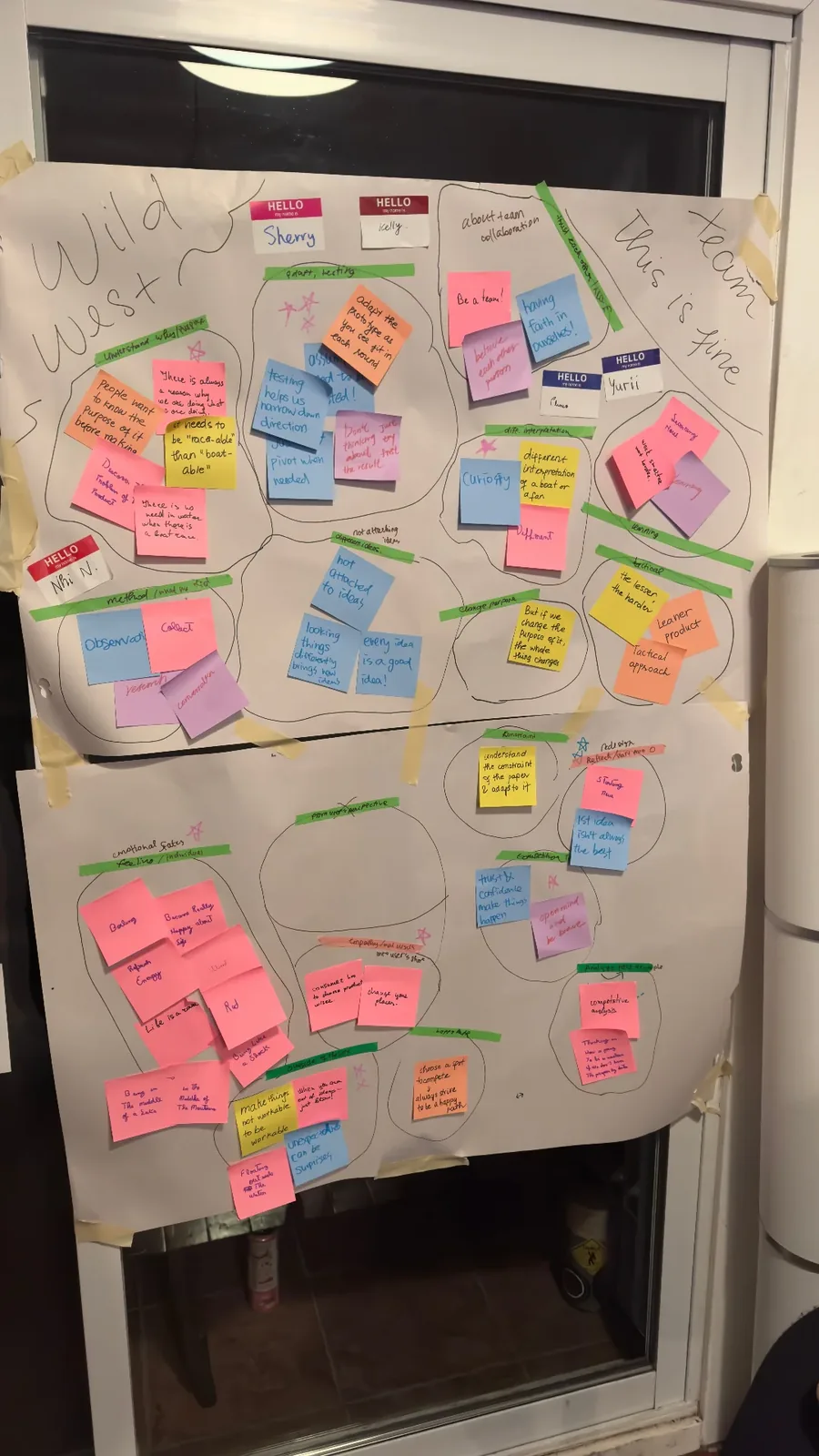
Wild West ideation with team insights
Judge Feedback
Our service concept "This is Fine Meme" was evaluated by 5 judges across categories including Function, Theme, Impact, Process, and Creativity.
"Great prototyping! Are the artists getting paid?"
- Marie-Hélène
"Lovely idea. A bit hard to spot the core problem it responds to."
- Silas
"Love the phone prototype. Wonder how non-artists access in other ways."
- Jennifer
"Great cause, coordinated partnerships, low cost to join."
- Leon
"Love the idea to build community & for artists to find inspiration."
- Charlotte
The feedback highlighted our strong creativity and prototyping, while raising valid questions about the core problem being solved. These were valuable insights for future service design work.
Design Decisions
Instead of a traditional slide deck, the team chose to perform the service concept as a live skit with props. This made the abstract concept tangible and emotionally engaging for the judges.
Judges praised the prototyping approach. It communicated the service's emotional value far better than slides would have.
Early ideation focused on building a digital platform. We pivoted to designing the community experience first (physical meetups, partnerships, and shared spaces) with digital as a supporting layer.
App-centric solution with features list
Community-driven concept with lightweight digital touchpoints
Grounded the concept in real human interactions, making it more feasible and resonant within the 48-hour constraint.
With only 48 hours, we chose to interview strangers on the street about creative isolation rather than relying on secondary research or online surveys.
Online survey with generic questions about creativity
In-person street interviews capturing raw, emotional stories from real people
Uncovered authentic pain points that shaped a more empathetic and grounded service concept.
The team deliberately avoided evaluating ideas during brainstorming. We used a 'Wild West' board where every idea, no matter how absurd, was captured before any filtering happened.
This approach surfaced the emotional connection theme that became central to the final concept, which wouldn't have emerged from a more structured process.
Key Takeaways
- •Wild ideas only earn their place when they survive contact with real users. Street interviews killed our weakest assumptions in hours, not weeks.
- •Performance beats slides for service design. Acting out the experience forced clarity about who shows up, what they feel, and what is missing.
Designing under a 12-hour clock removed the safety of polish and forced sharper choices: which insight matters, which idea ships, which detail can wait. The biggest shift was treating storytelling as a design tool, not a wrap-up. It is how a service concept becomes legible to people who have never lived it.
Future Improvements
- Develop a digital prototype to test the community matching concept with real users
- Partner with local venues to pilot pop-up creative meetups in Vancouver neighborhoods
- Design an onboarding flow that matches artists by medium, style, and availability
- Explore revenue models like sponsored spaces or premium mentorship connections