Flash Service
A two-sided marketplace where structured proposals replace open chat, turning local-service hiring into a clear, traceable transaction.
The Product
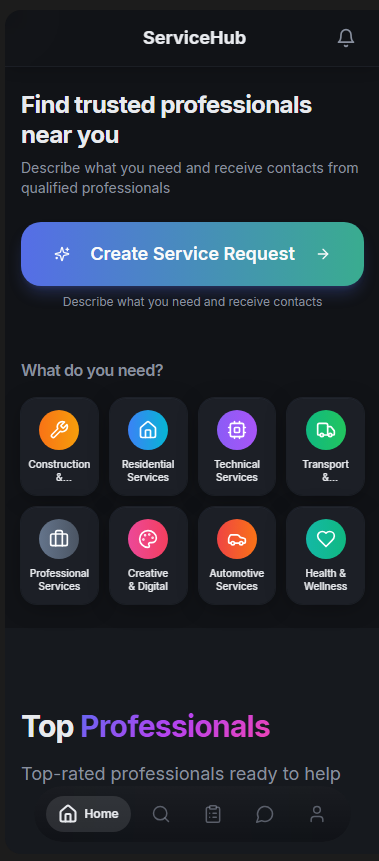
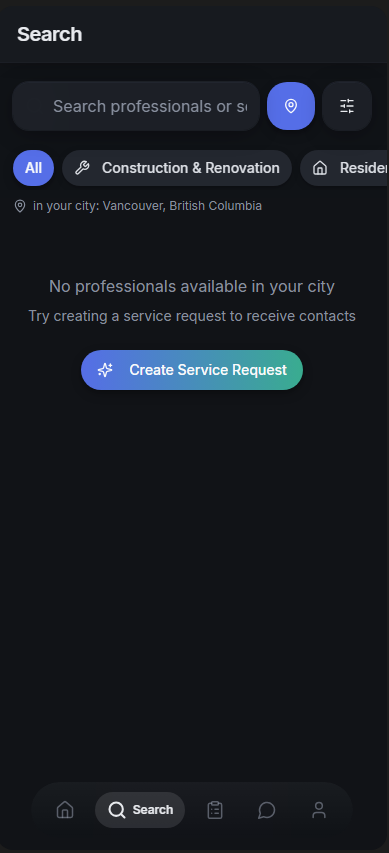
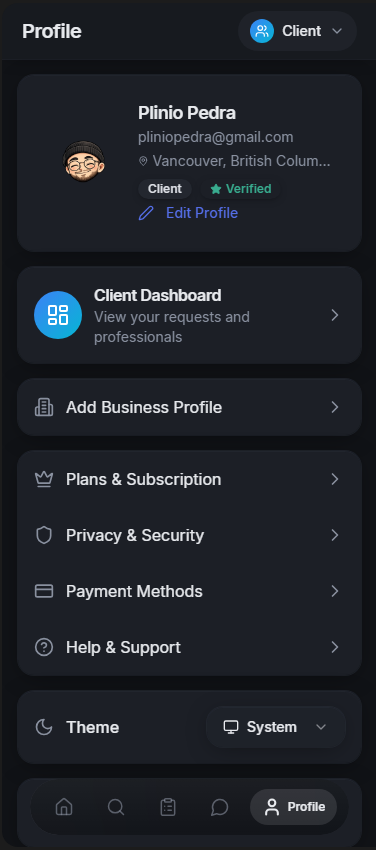
A structured local-services marketplace that replaces the guesswork of hiring with clear proposals, location-based matching, and automated contracts, for clients, professionals, and businesses in one platform.
Co-Owner & Product Designer
November 2025 - Present
What this project achieved
Replaced WhatsApp-style negotiation with a structured proposal flow that turns scattered chat into traceable, signed contracts.
Clients hesitate less, professionals stop losing work inside the chat, and every deal carries an owner from match to delivery.
The Problem
Hiring a local service today still relies on word of mouth, scattered directories, and open WhatsApp threads. Clients hesitate, contractors miss work, and nobody owns the deal once it leaves the chat.
Existing marketplaces optimize for search and reviews, but they leave the actual negotiation, scope, price, accountability, off-platform.
Flash Service was an opportunity to design the part everyone skips: a structured agreement layer between client and pro, built into the product instead of bolted onto a chat.
The Solution
A two-sided marketplace built around structured negotiation. Clients describe what they need, professionals respond with proposals and counter-proposals, and accepted offers turn into signed contracts automatically, no chat threads, no missed details.
How it works:
- •Request-first matching with location-based discovery
- •Proposals and counter-proposals replace open-ended chat
- •Accepted offers generate signed contracts automatically
- •Contracts can be amended dynamically as scope changes
Structured Negotiation
Auto-Contracts
Multi-Profile System
Platform Redesign
Flash Service underwent a complete redesign across all platforms, modernizing the visual identity and improving usability.
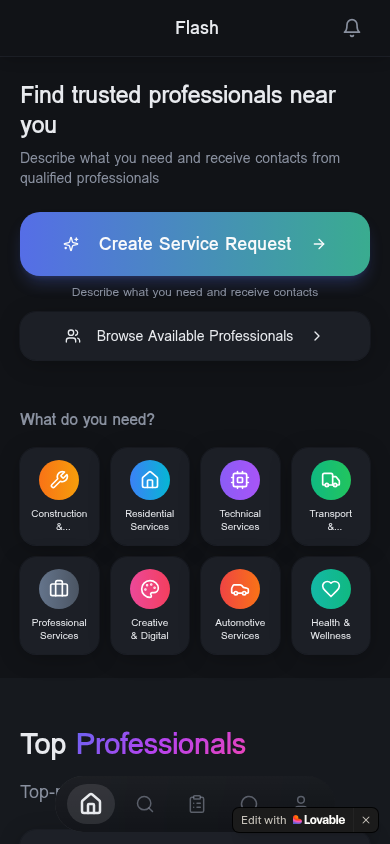
Mobile. Before & After
The redesign modernized the visual language and simplified the home screen to surface key actions faster.

Before

After
Responsive Web Platform

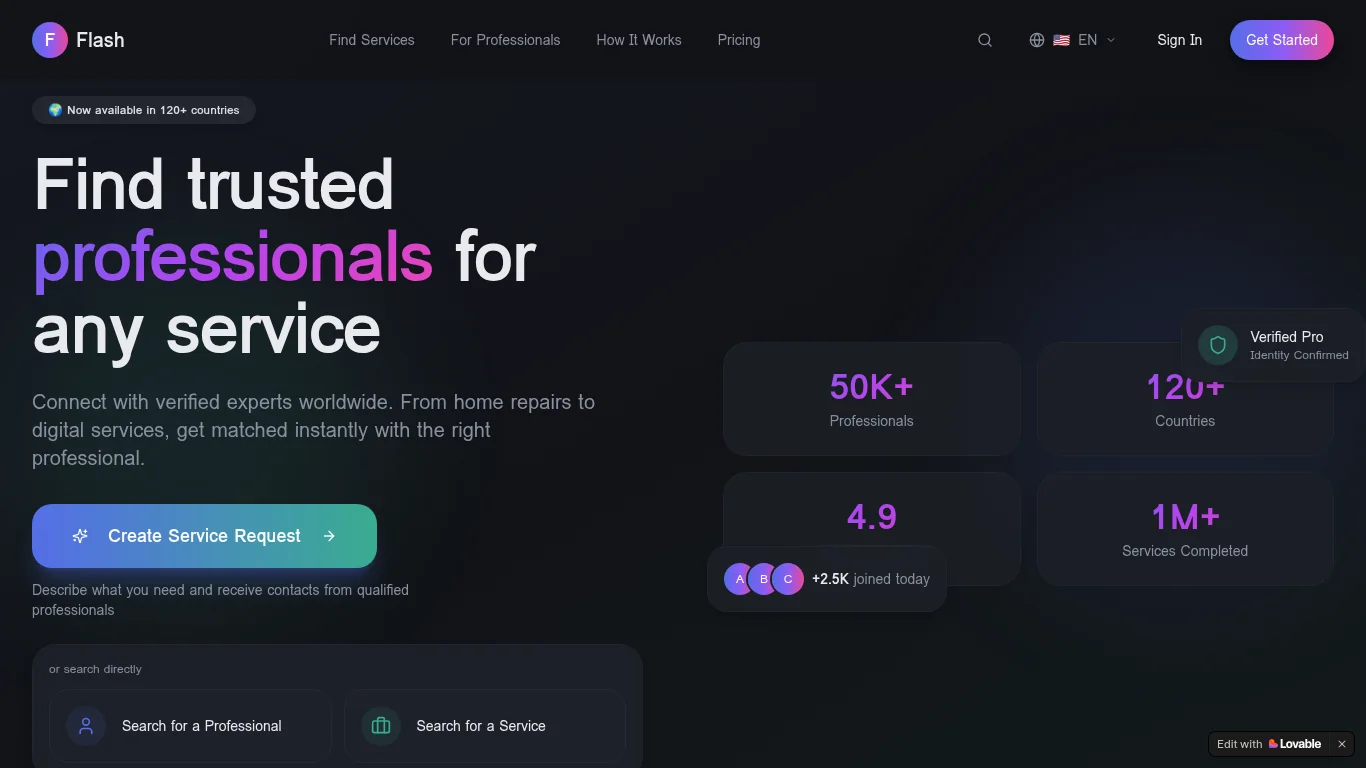
Desktop, 1366px
Full-width layout with search, categories, and trust signals for first-time visitors.

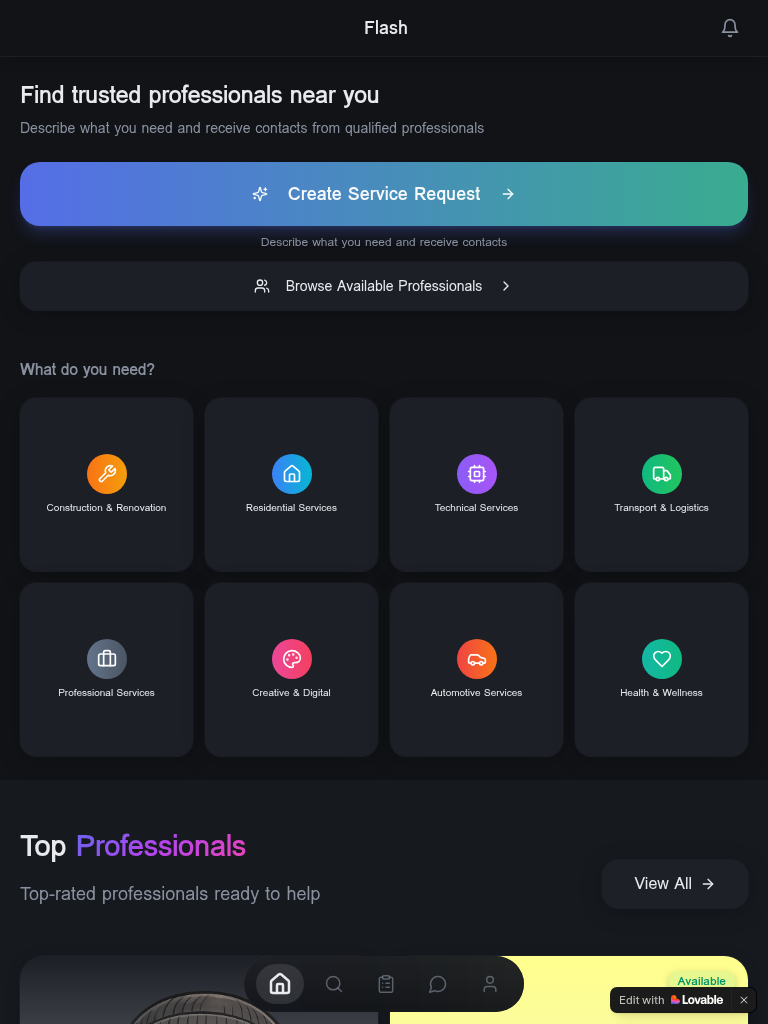
Tablet, 768px
Adapted grid layout preserving all key elements without horizontal scroll.
Key Web Screens

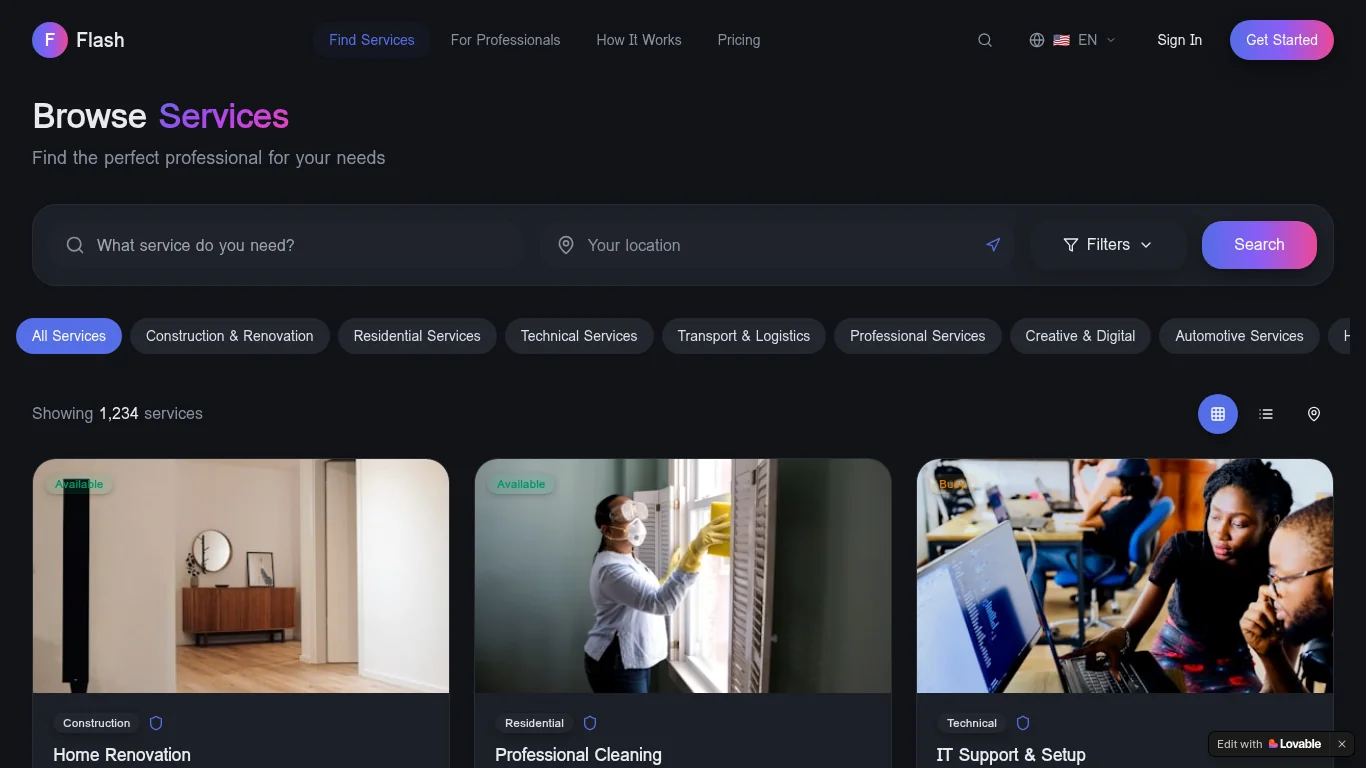
Browse Services
Search, filters, category chips, grid/list/map views

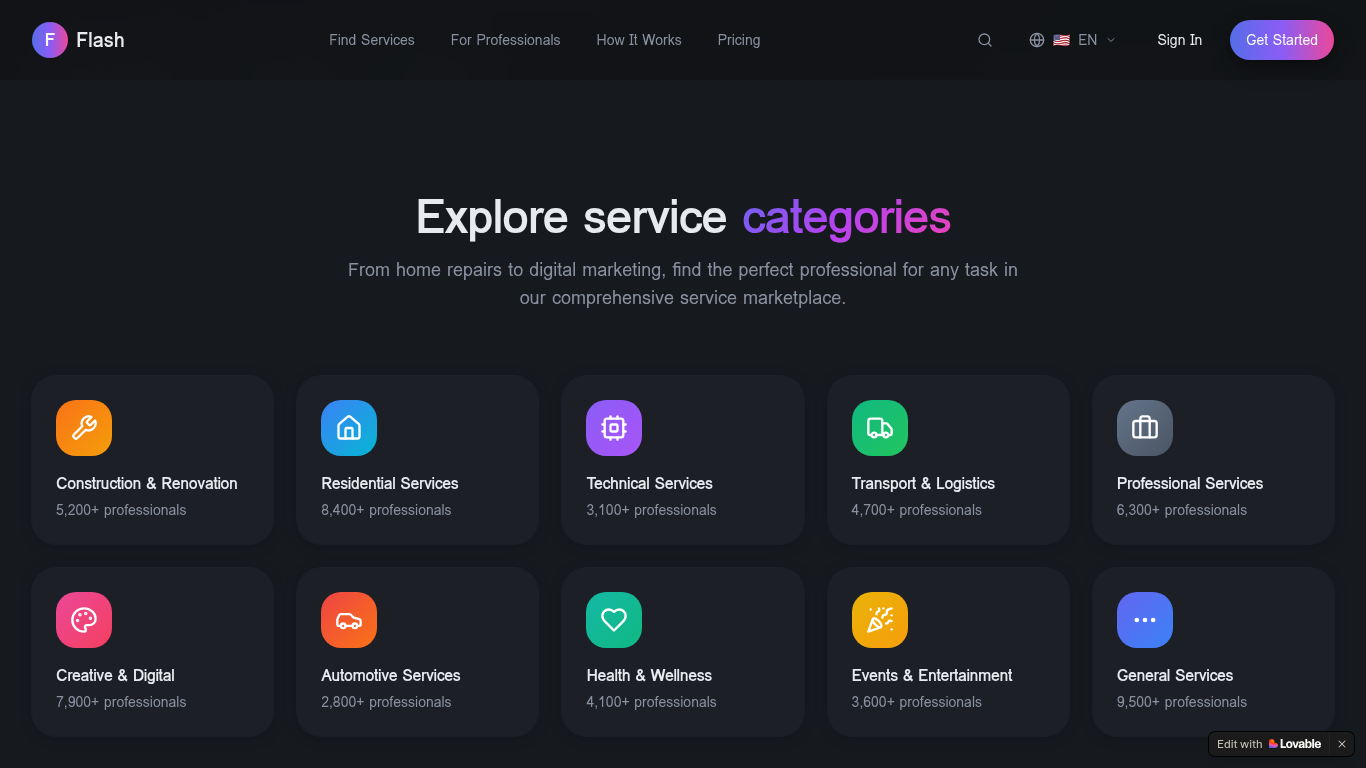
Service Categories
10 categories with professional counts

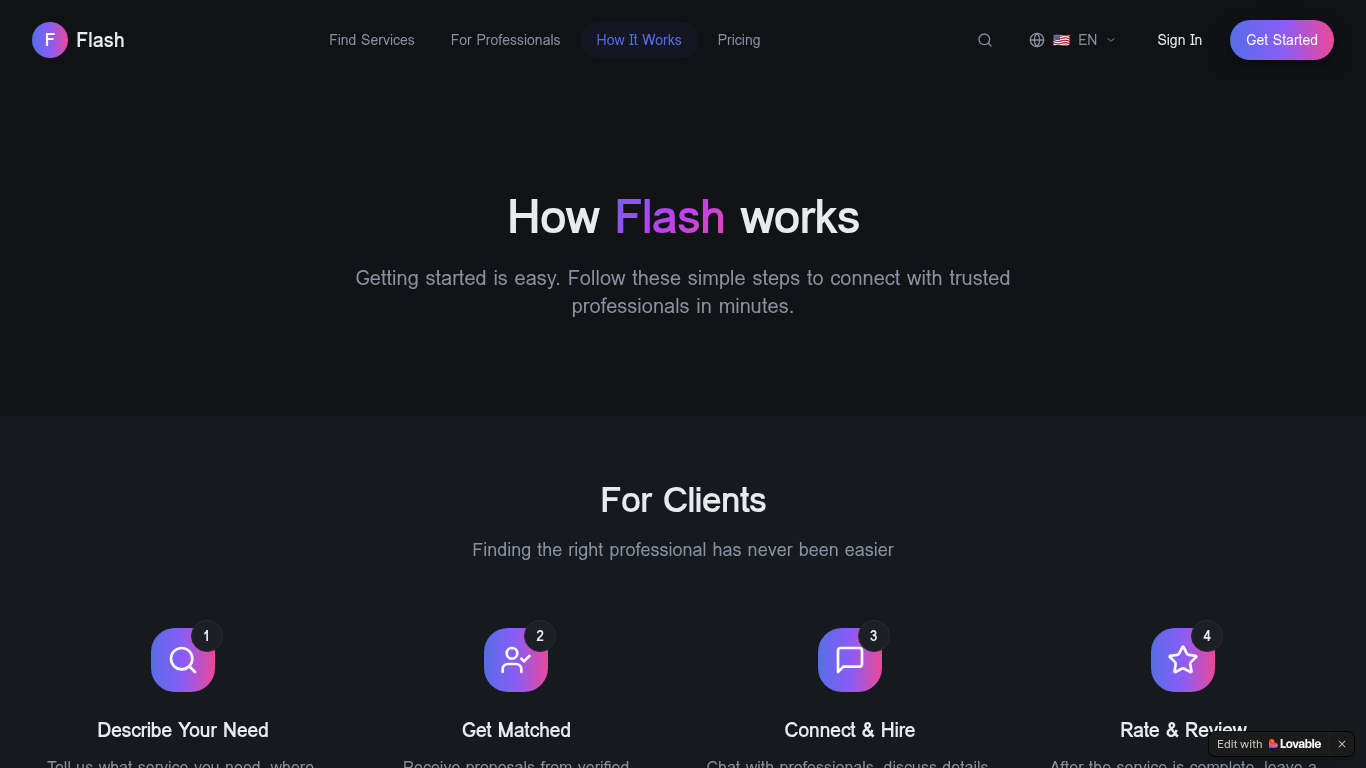
How It Works
Step-by-step onboarding for clients & professionals

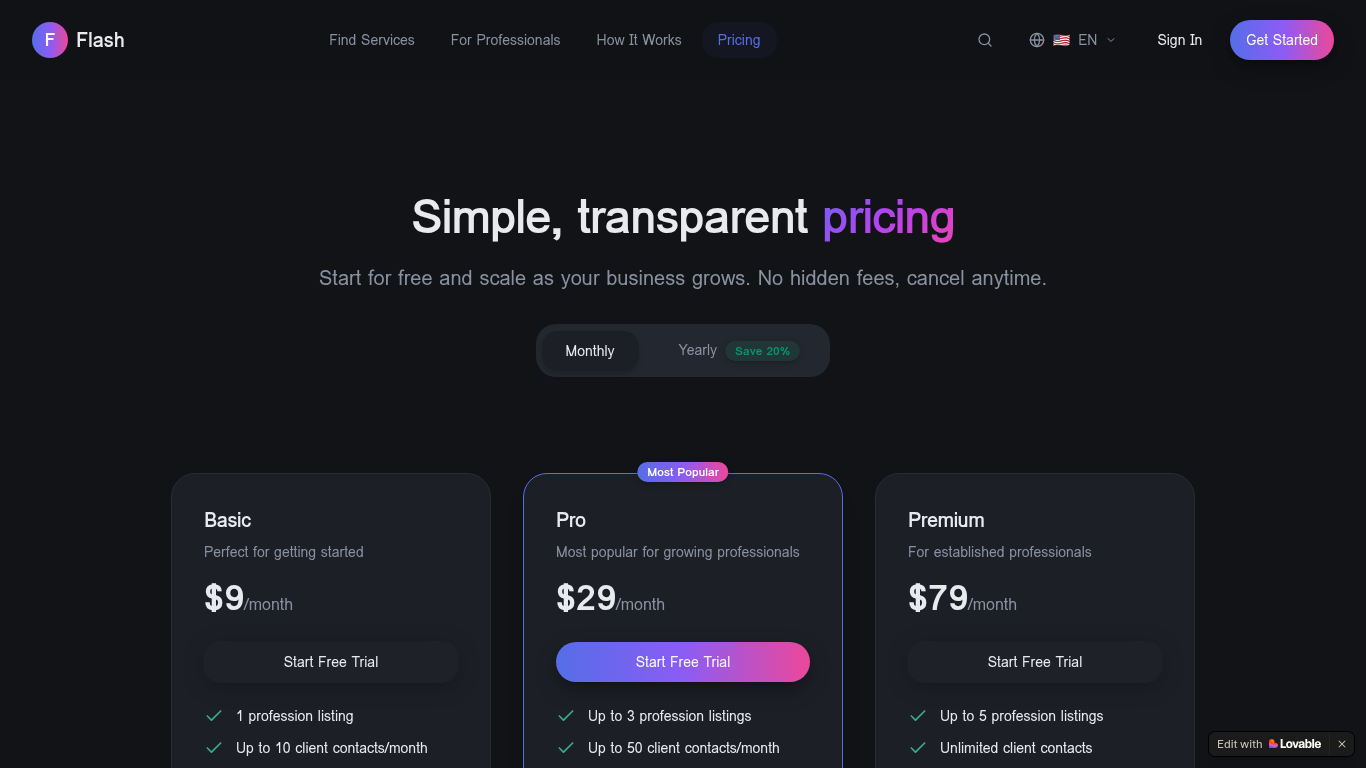
Pricing Plans
Tiered pricing with monthly/yearly toggle
Core Screens
Key flows from the client-side mobile experience
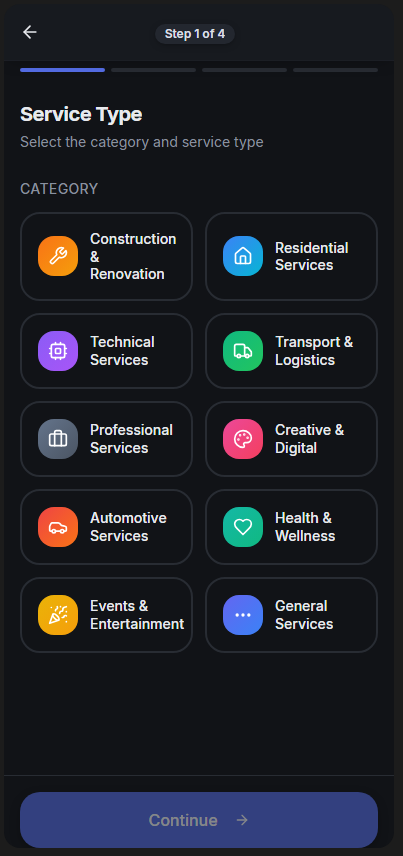
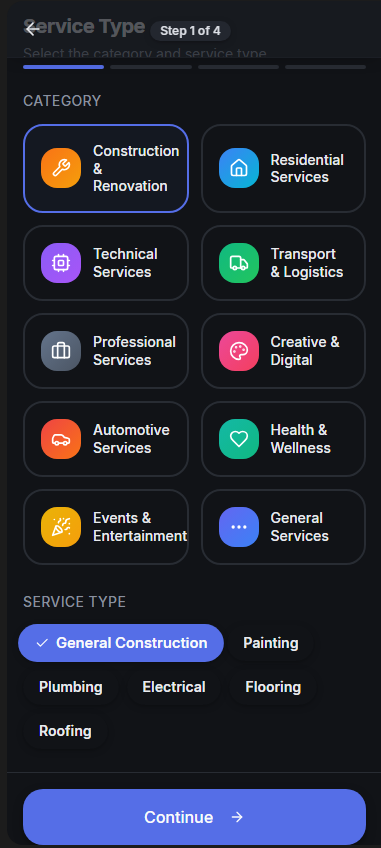
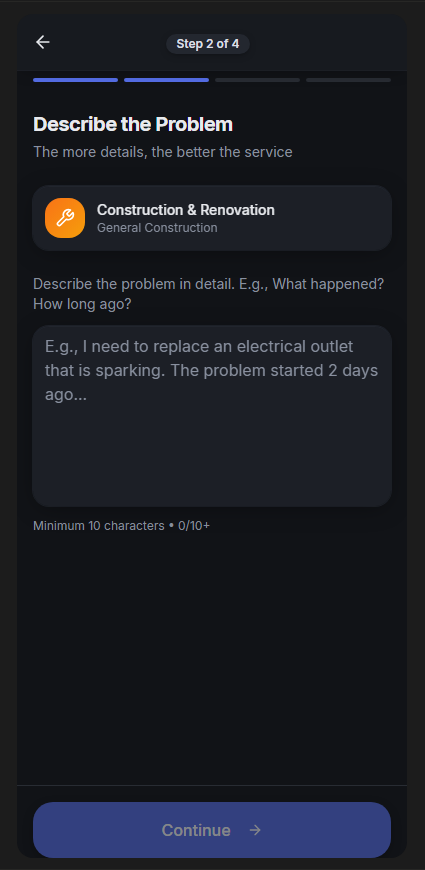
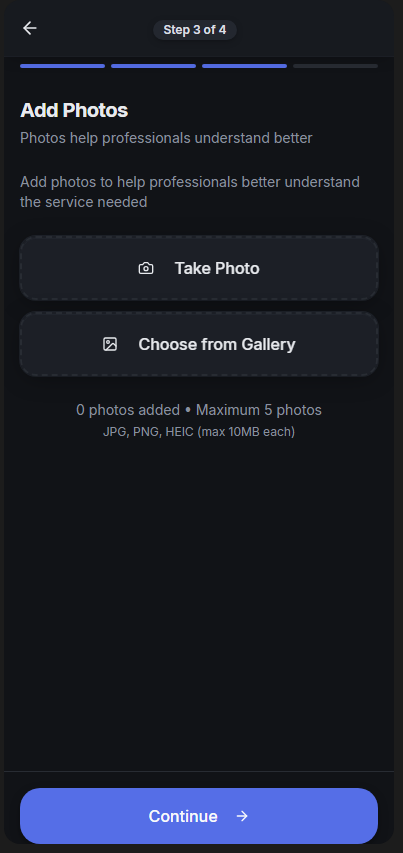
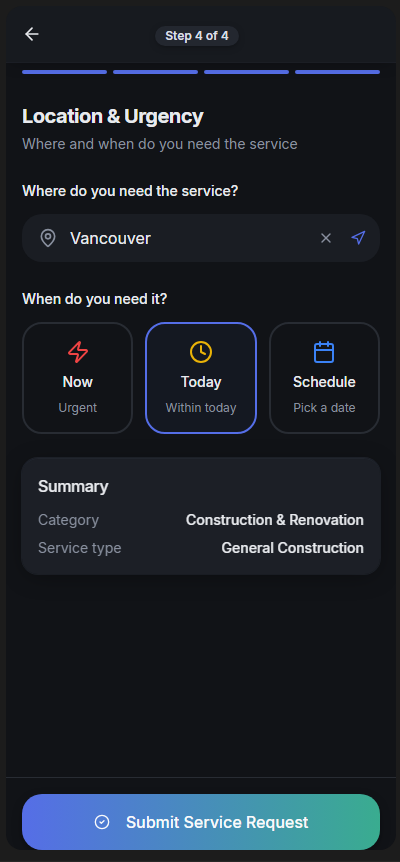
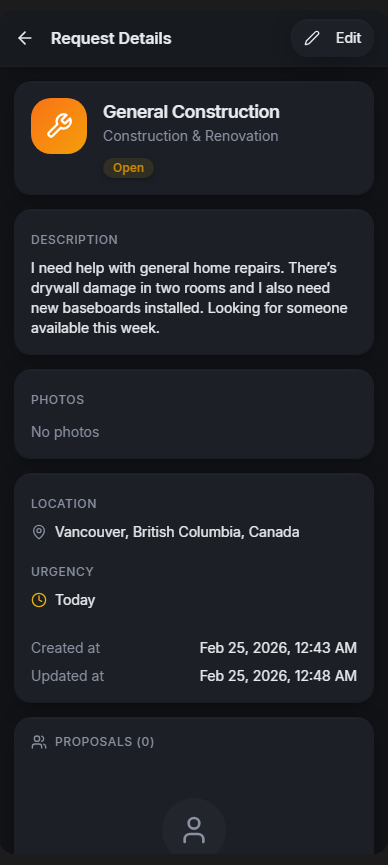
Service Request Flow
A guided 4-step process to submit a service request





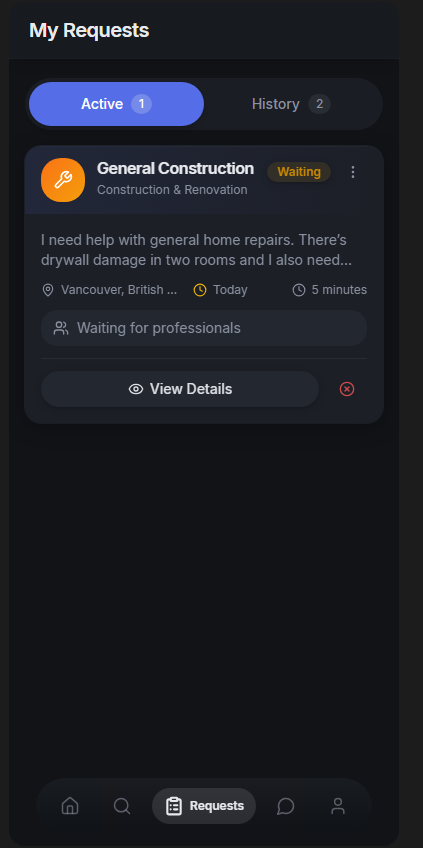
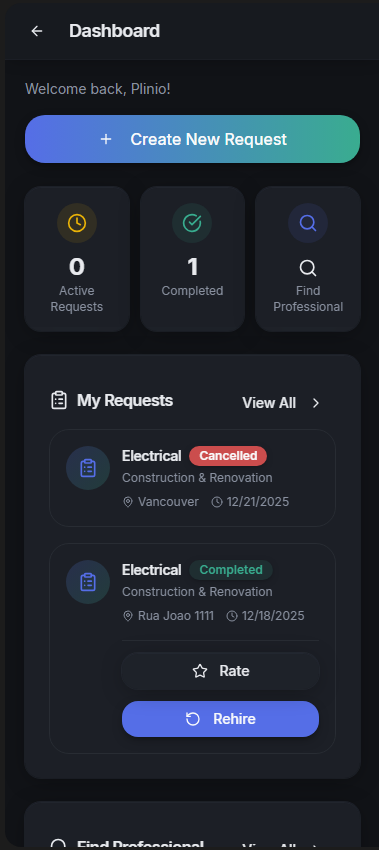
Request Management



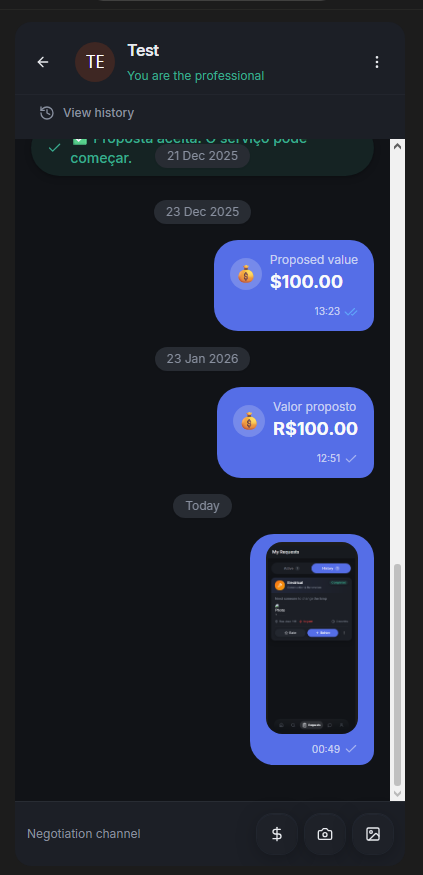

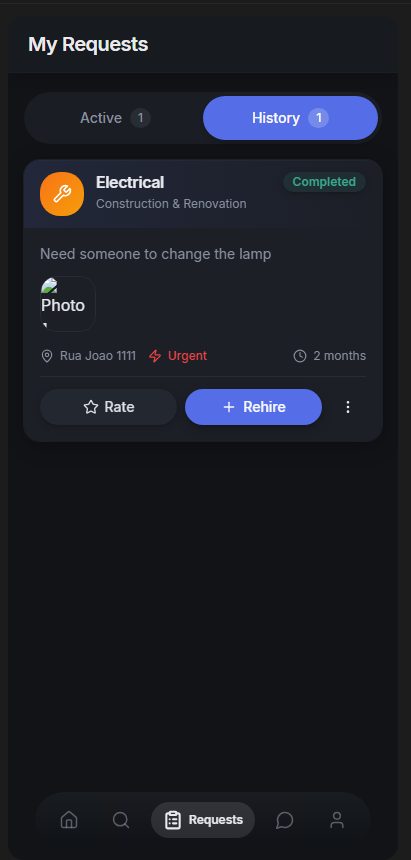
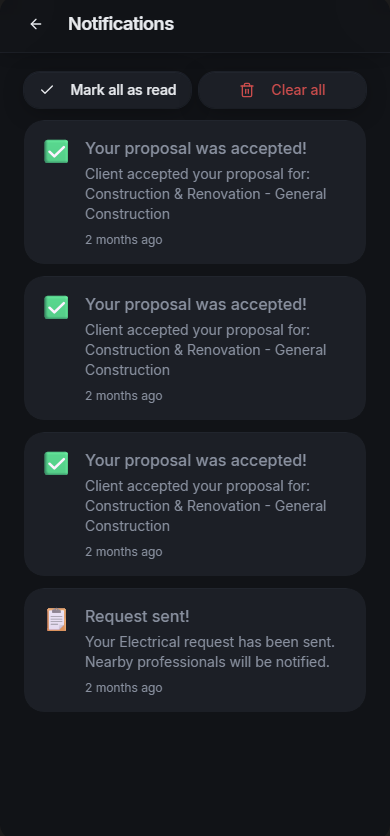
Profiles & Communication

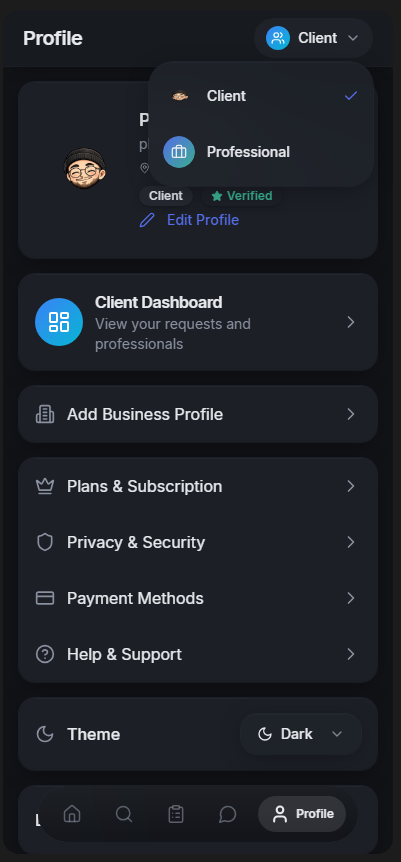



Explore the Prototype
Browse the Flash Service app screens and experience the service request flow.
1 / 14
Design Decisions
Instead of making clients browse provider listings and compare profiles, we designed a request-first flow where the client describes their need and gets matched automatically, reducing decision fatigue.
Traditional marketplace search with filters, reviews, and manual comparison of service providers.
Guided 4-step request submission that matches clients with available contractors automatically.
Reduced average time-to-hire from 25 minutes of browsing to under 5 minutes of guided input.
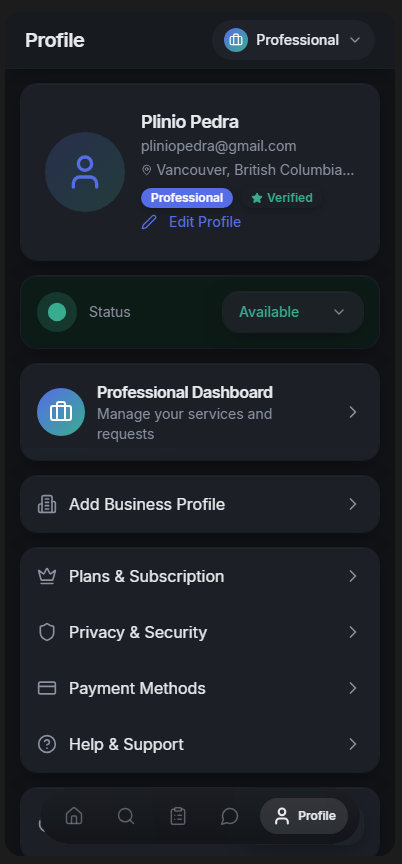
Research revealed many users are both clients and service providers. Rather than forcing separate accounts, we designed a single profile with role switching.
Separate registration and login flows for clients and professionals, duplicating user effort.
Unified profile with a simple toggle to switch between client and professional modes within the same account.
Eliminated duplicate accounts and enabled seamless role switching, increasing user retention.
Traditional chat leads to ambiguity and disputes. We replaced it with a structured transactional model based on proposals, counter-proposals, and media exchange, making negotiations traceable and clear.
Users exchanged phone numbers and negotiated outside the app, leading to disputes and no accountability.
Built-in structured proposal flow with counter-proposals and media sharing, keeping all communication traceable and auditable.
Reduced negotiation disputes and created an auditable trail that built trust between parties.
Key Takeaways
- •Replaced WhatsApp-style negotiation with a structured proposal flow that gave both sides a clear, traceable agreement.
- •Designed a single account that switches between client, professional, and business roles without leaking data across profiles.
- •Used location-based matching to cut marketplace noise and surface providers who can actually take the job.
- •Iterated navigation, scroll, and layout until the marketplace felt production-ready instead of prototype-ready.
Flash Service pushed me past interface work into product thinking, monetization, trust, and operations all at once. The hardest call was choosing structure over the open chat people are used to, knowing it would feel slower at first. I am taking forward the habit of designing the agreement layer, not just the screens around it.
Future Improvements
- Implement real-time GPS tracking for service provider arrival estimates
- Add an escrow-based payment system to protect both clients and providers
- Build a review verification system to combat fake ratings and increase trust
- Introduce subscription tiers for frequent service users with priority matching
- Expand to support scheduling and recurring service bookings